
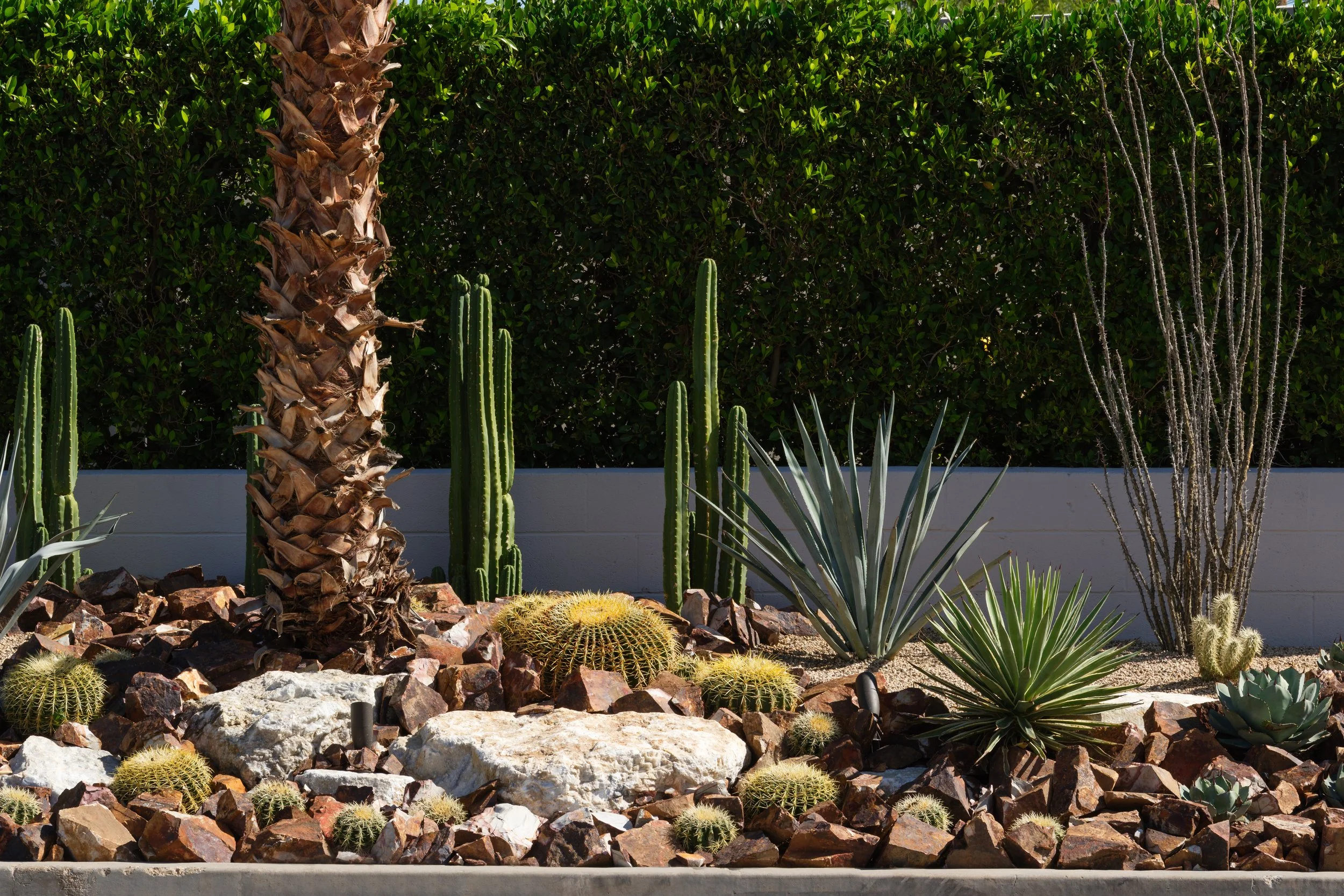
Cactus Shield
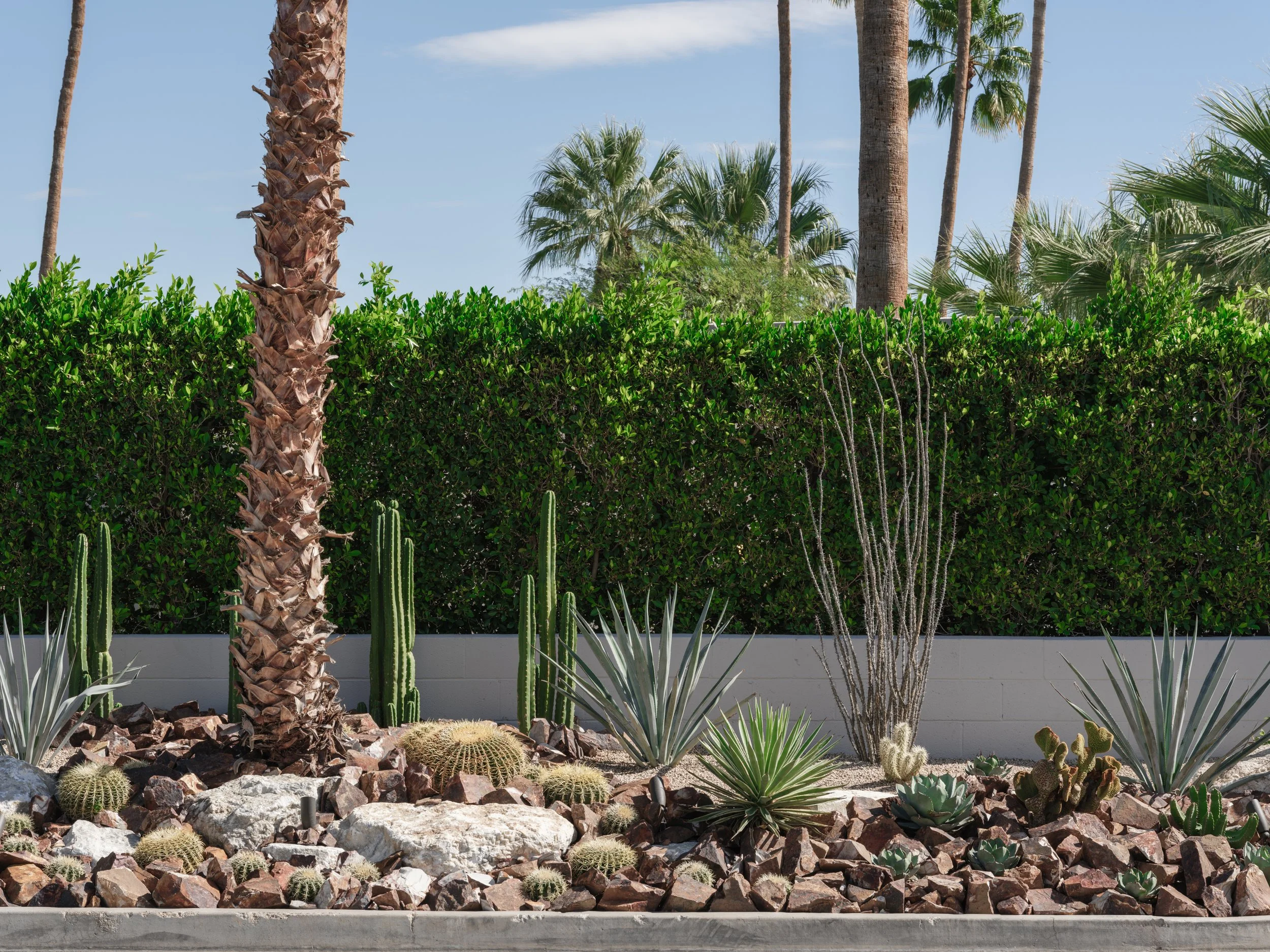
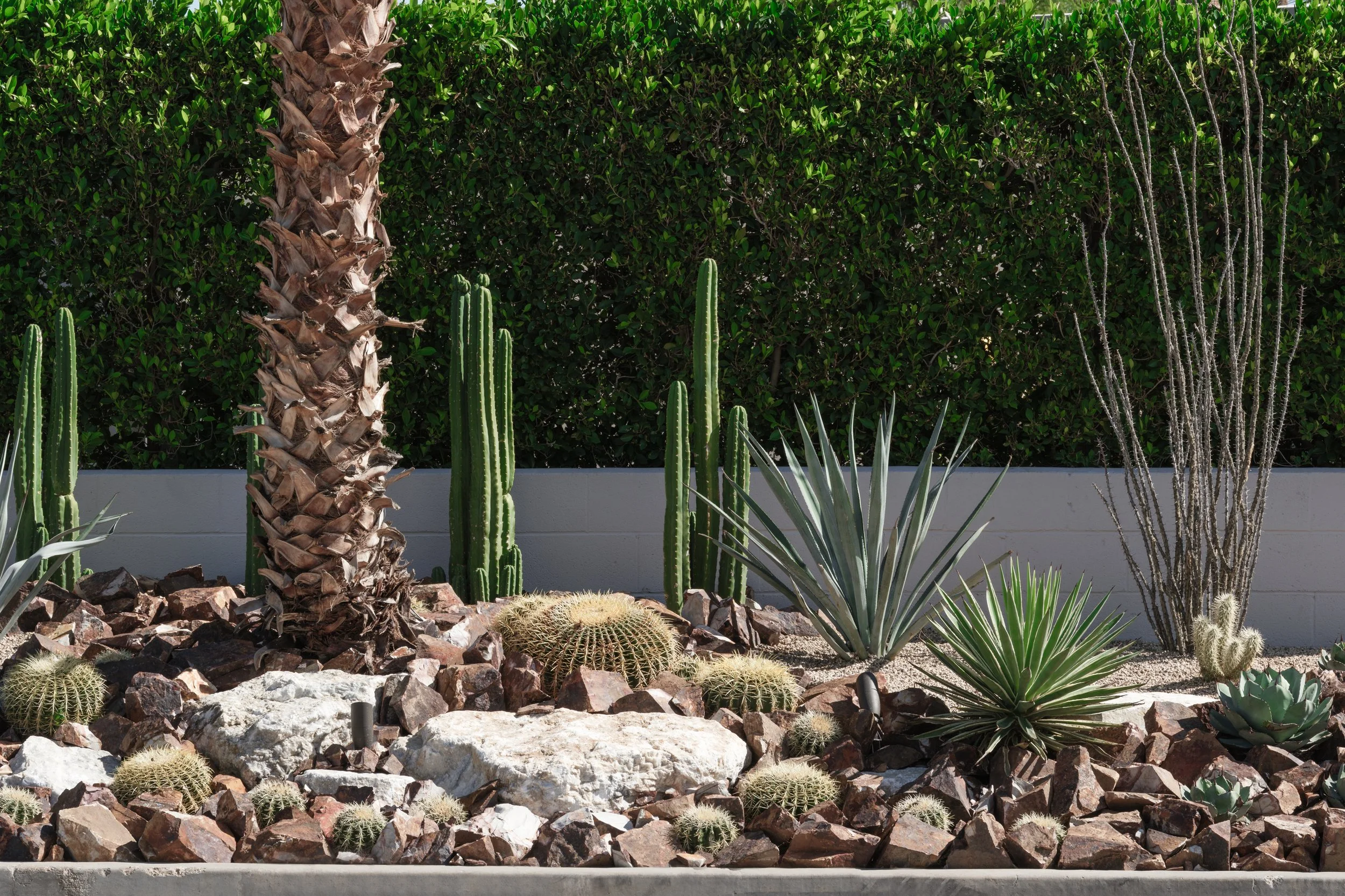
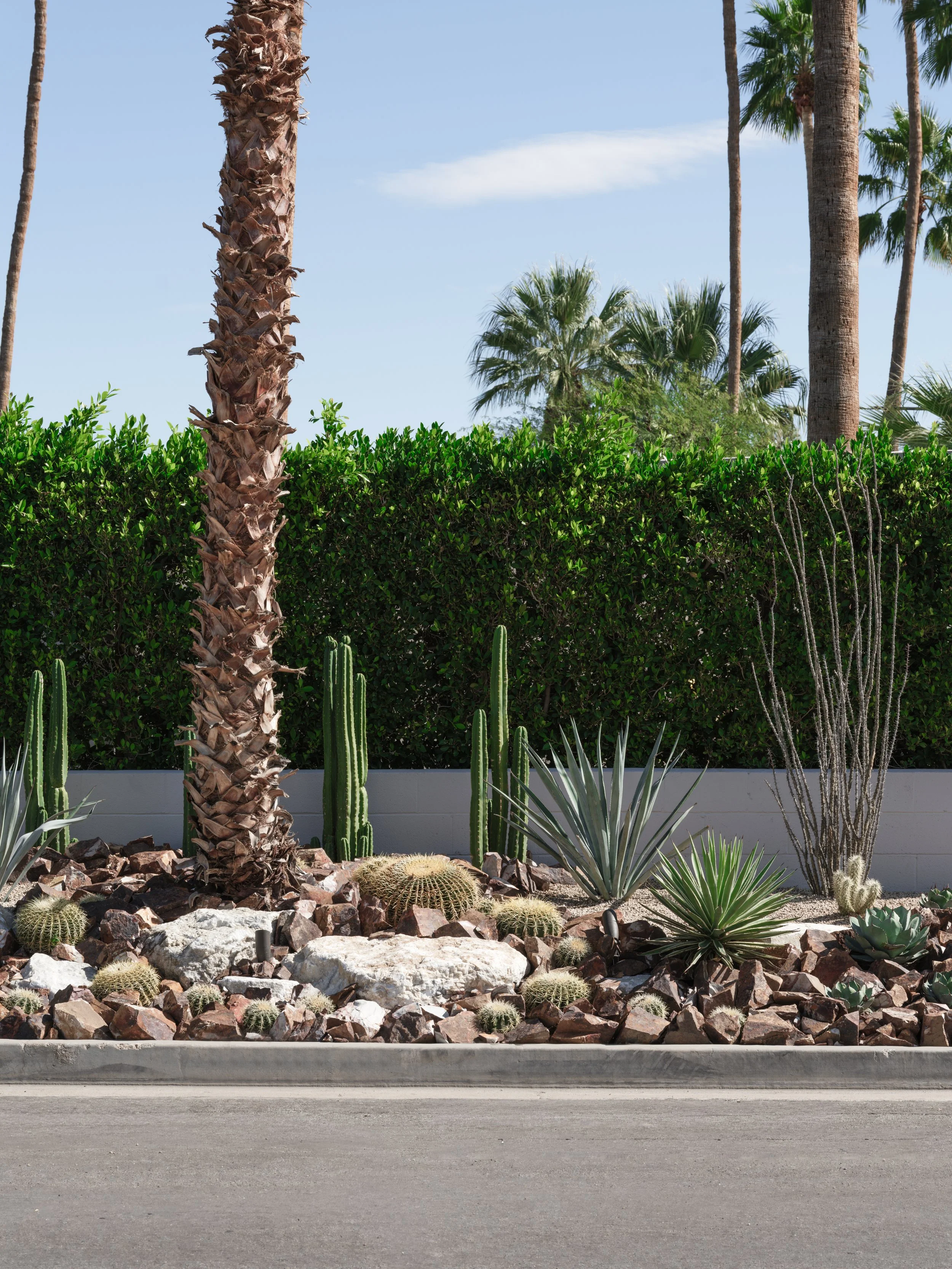
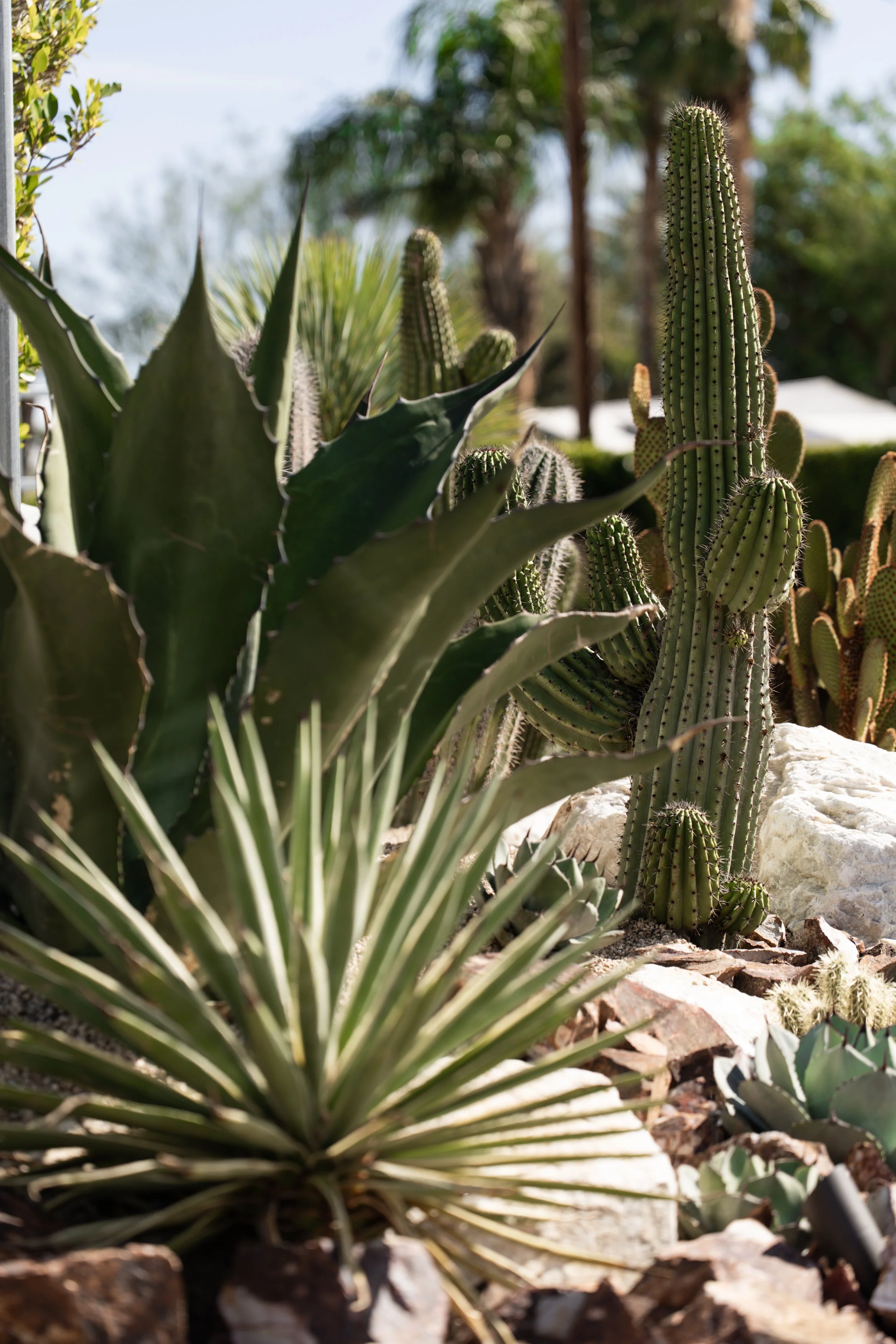
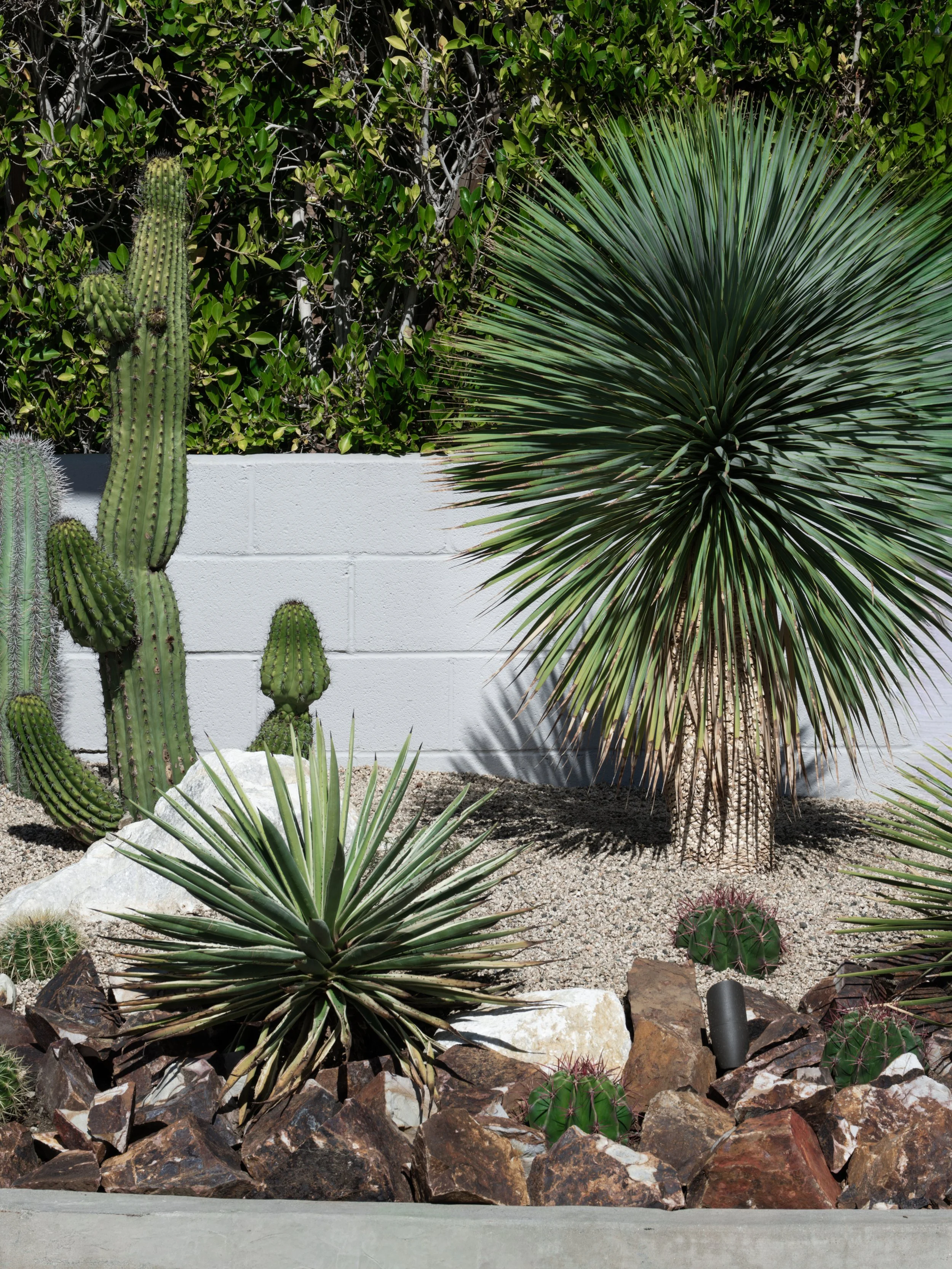
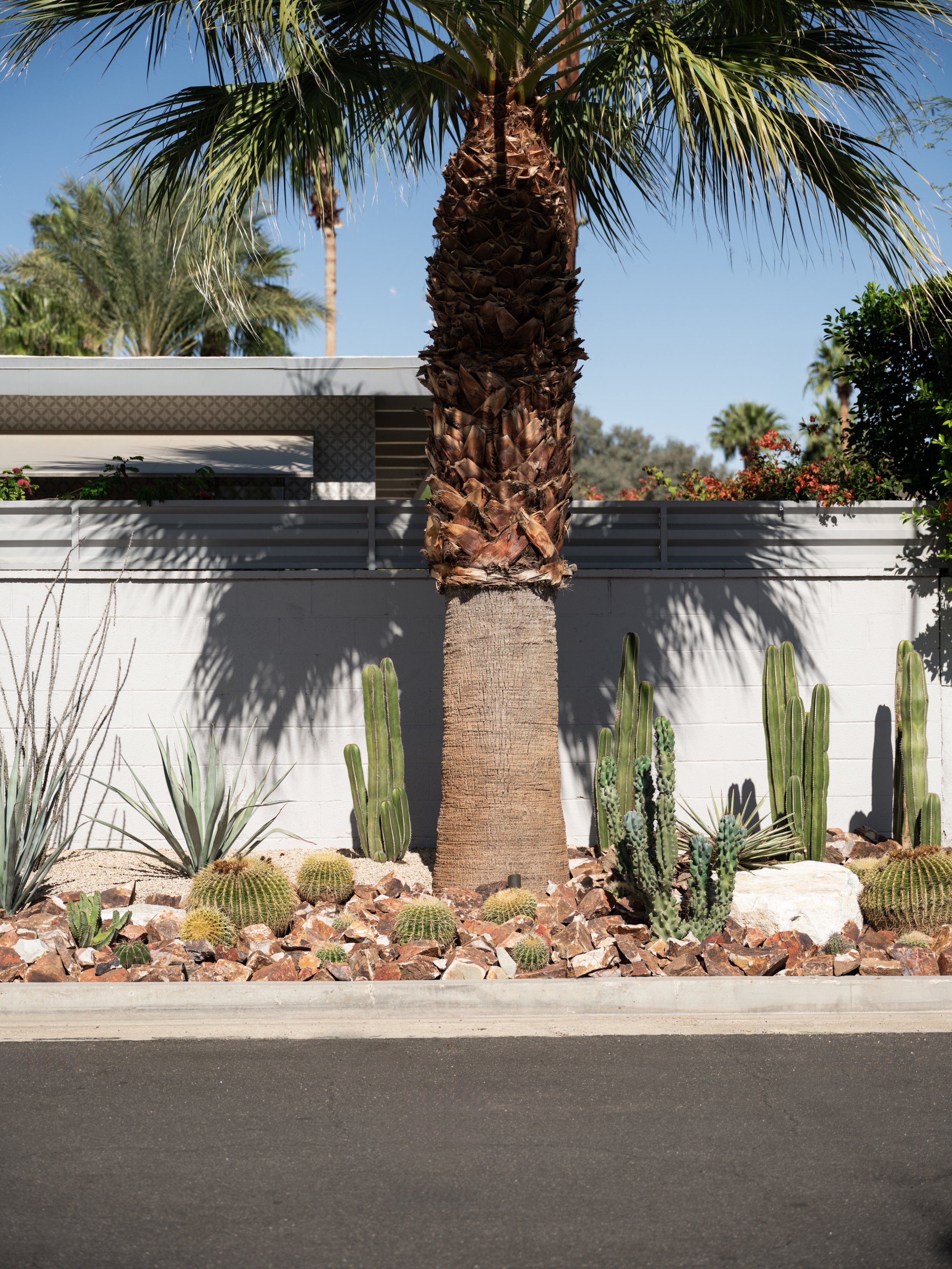
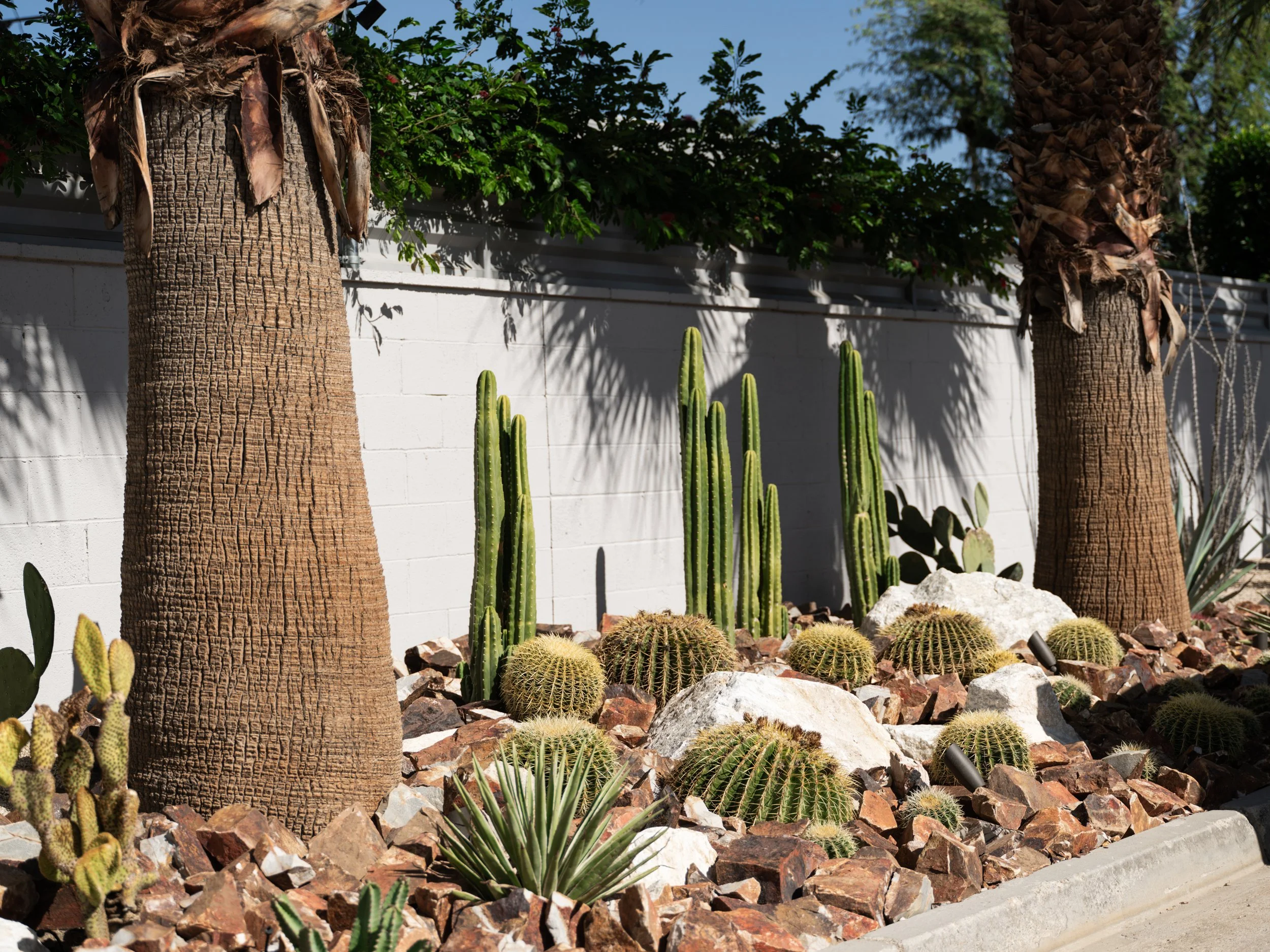
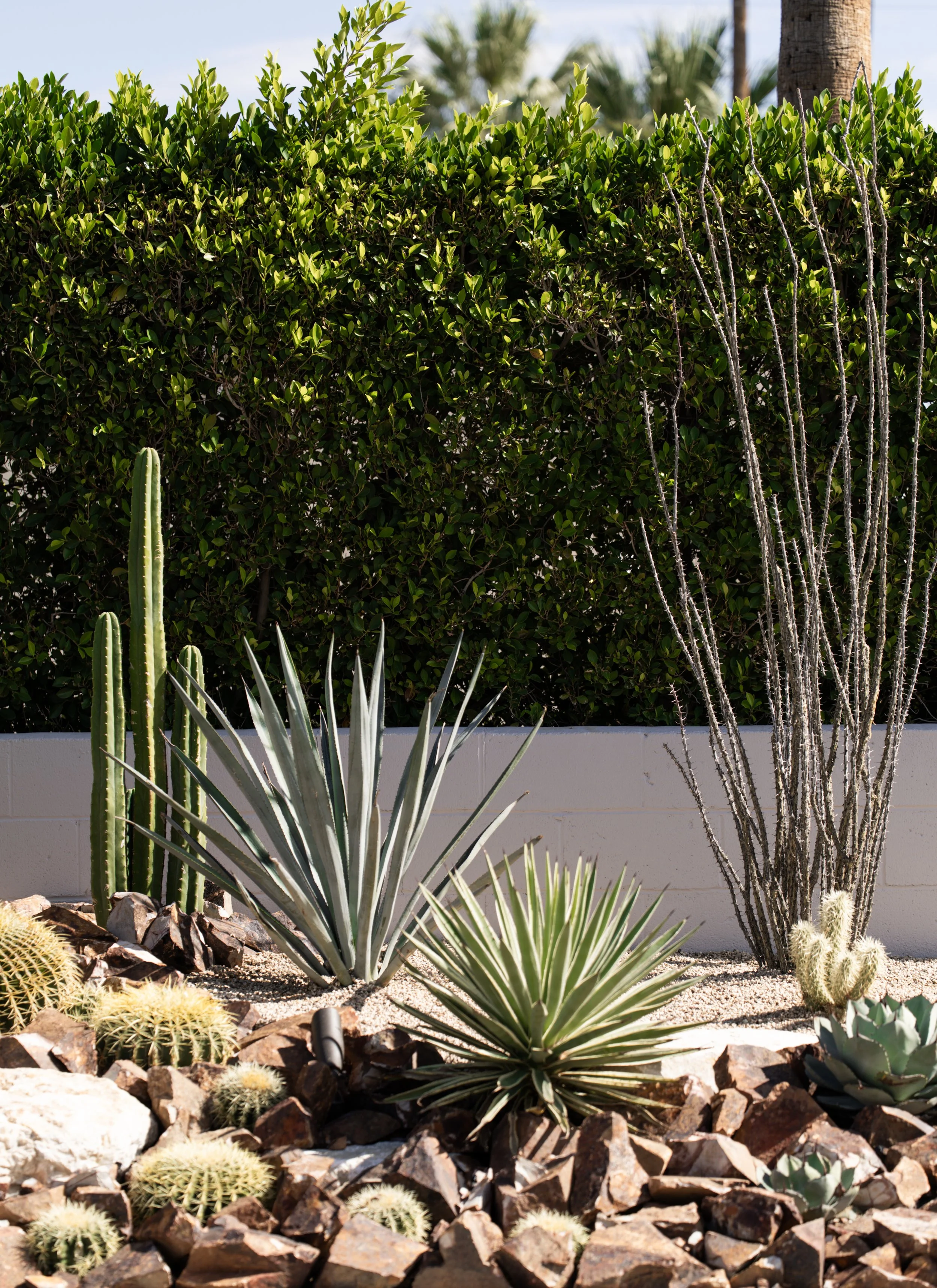
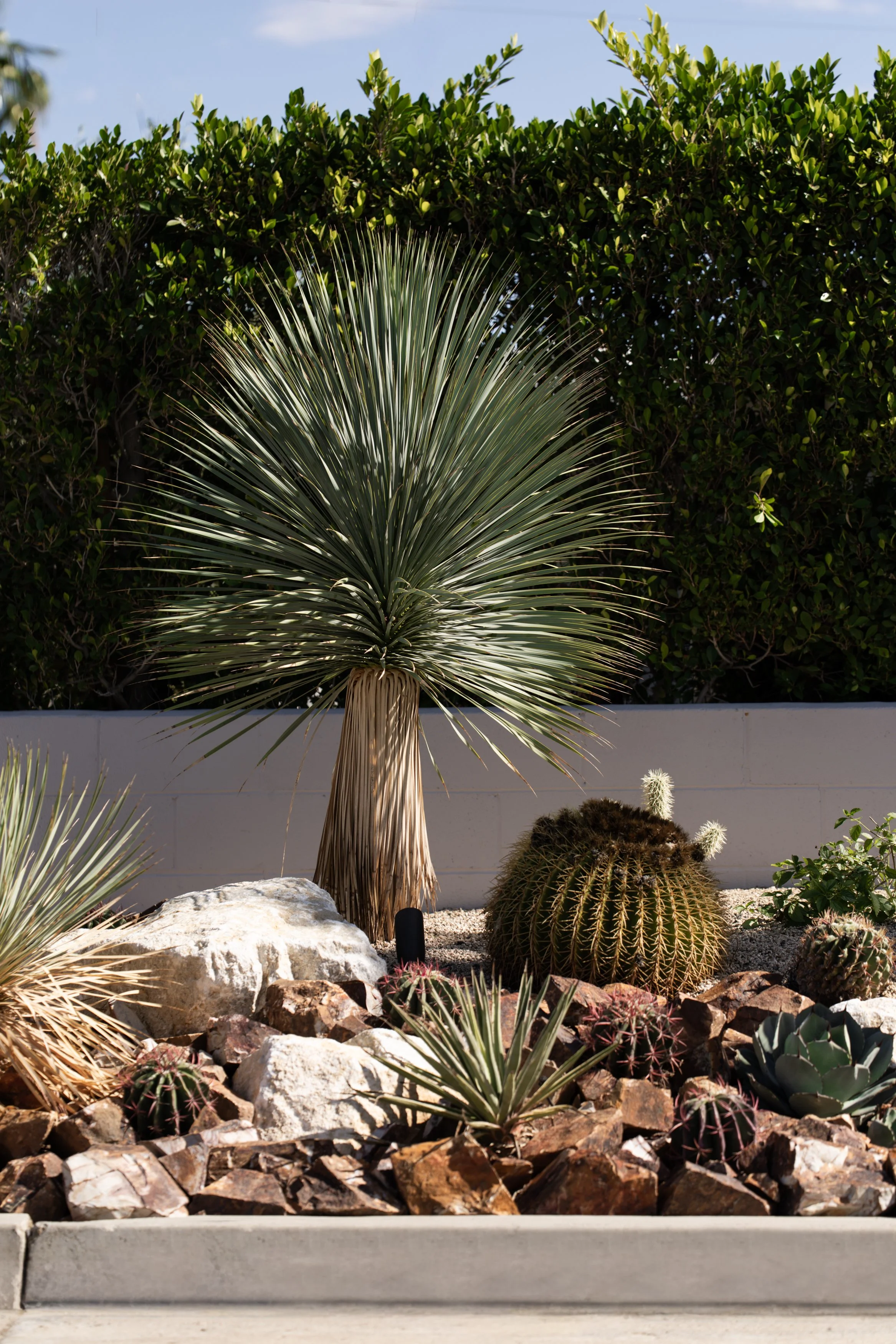
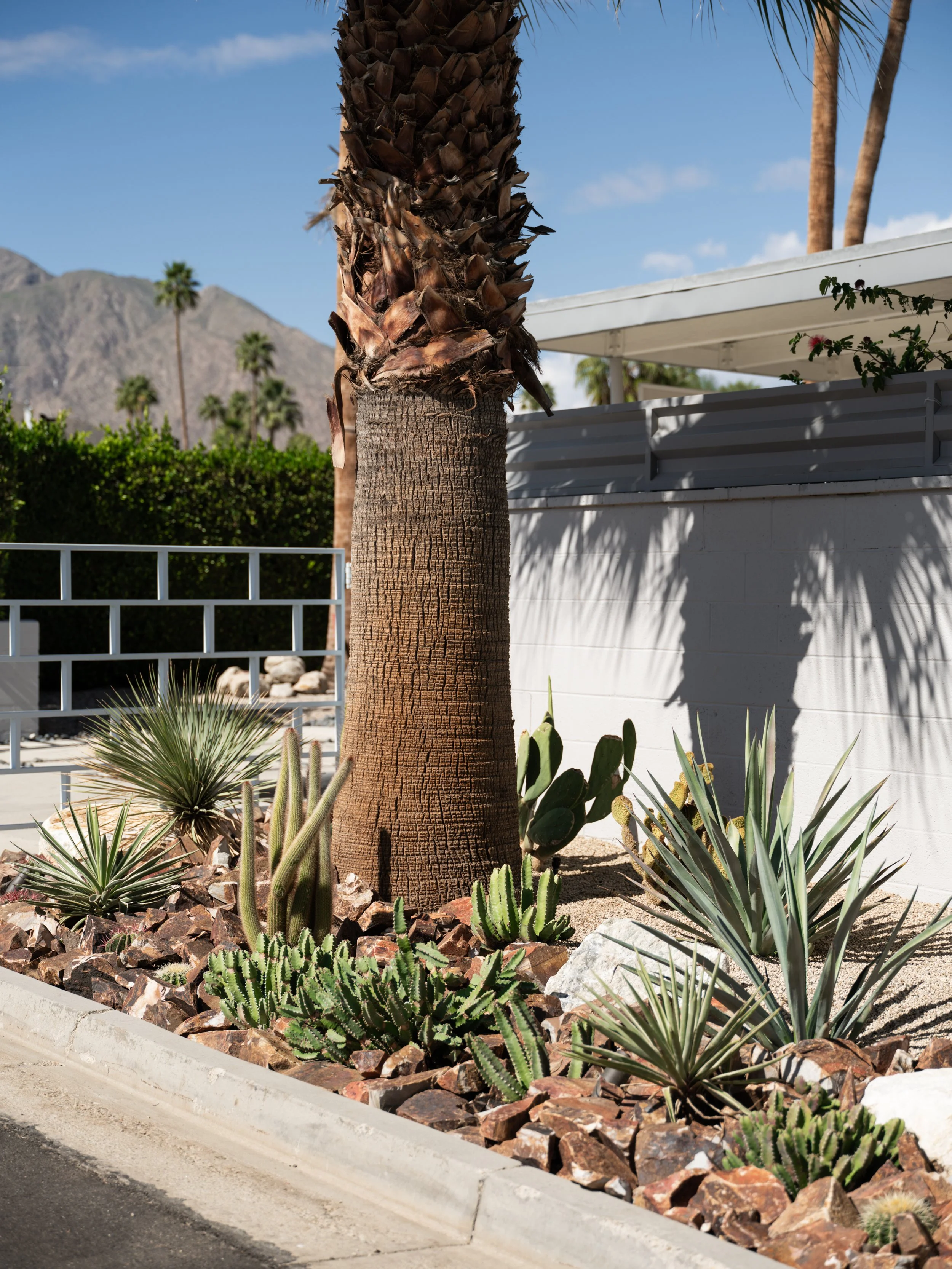
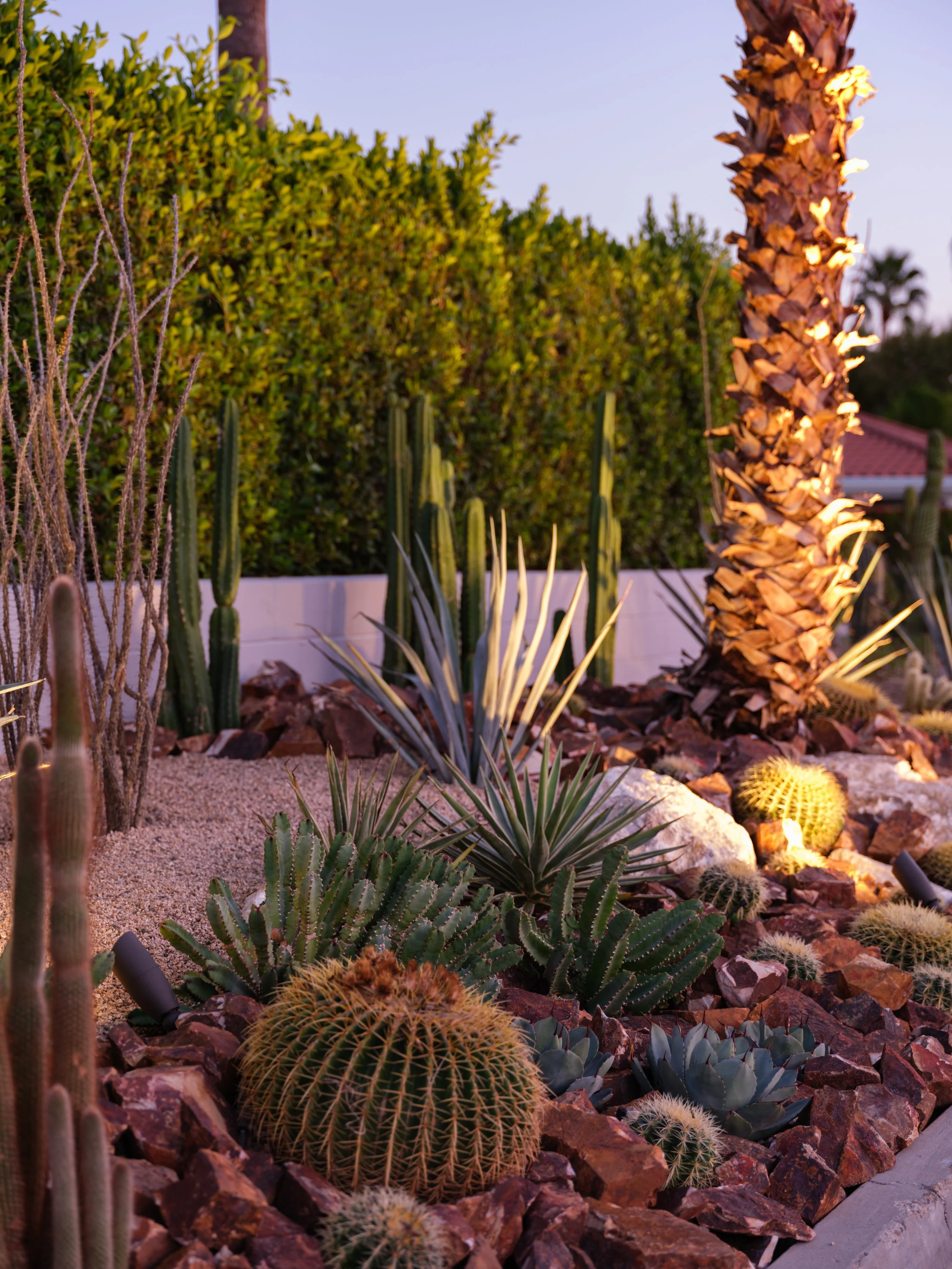
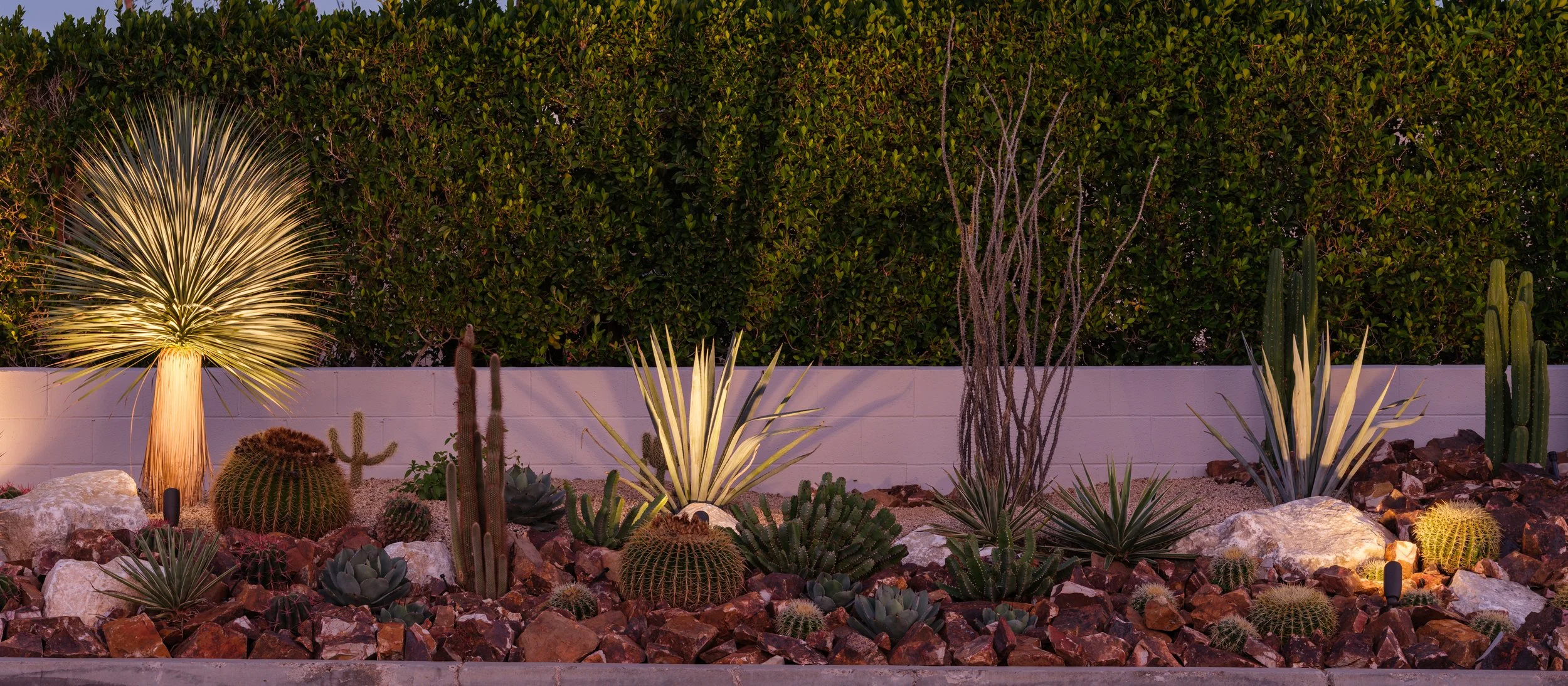
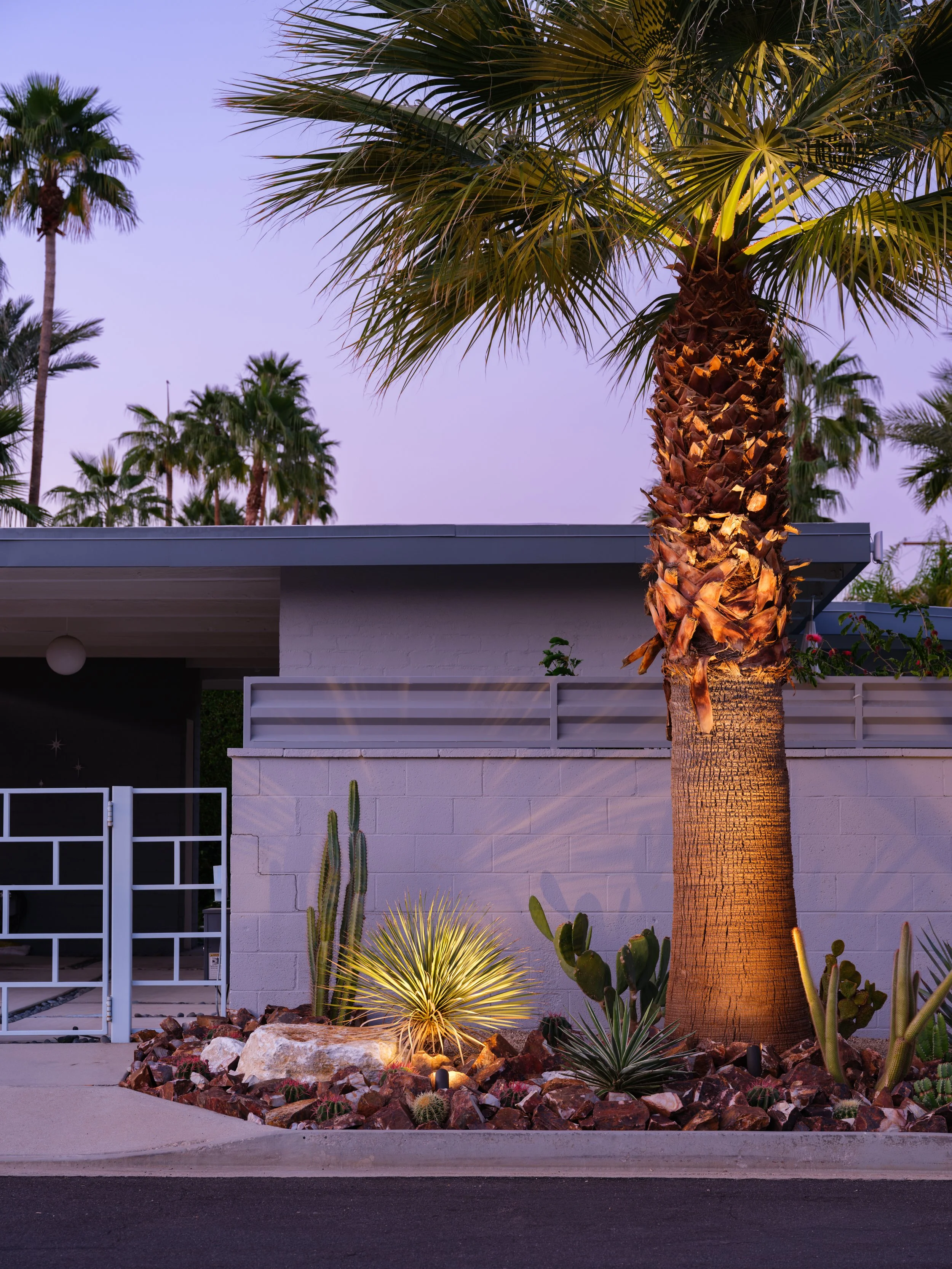
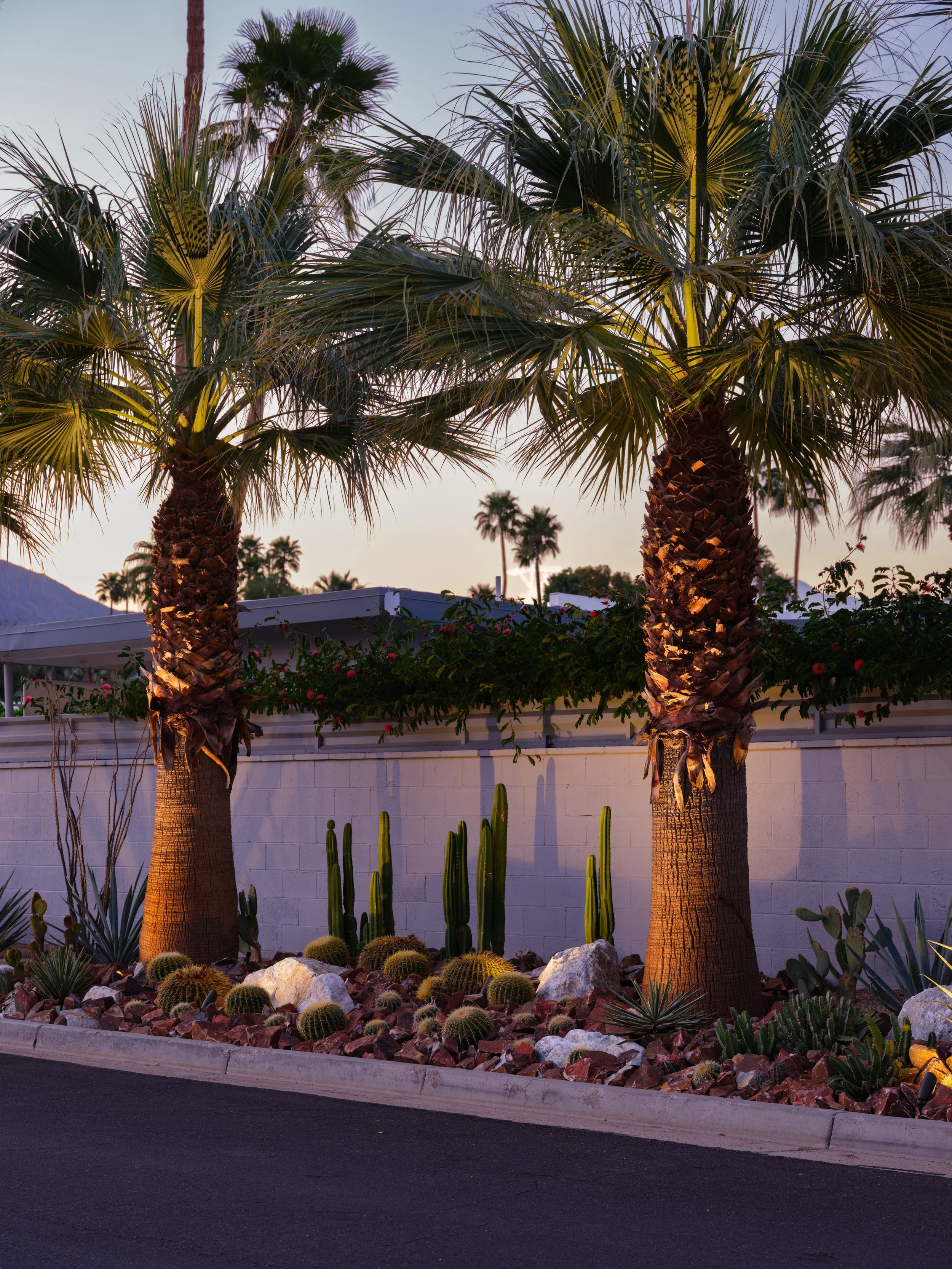
This project showcases the transformation of an underwhelming front yard into a bold and sculptural succulent garden we named Cactus Shield, created in collaboration with GDNC Nursery.
Why “Cactus Shield”?
The homeowner had experienced someone trespassing on her property wall and no longer felt safe. Her request was clear: create a natural barrier using cactus to discourage intrusion, without compromising aesthetics.
The design direction was intentionally strict: cactus, large rocks, and nothing lush. No soft tropical plants. No filler greenery. Only strong, architectural desert species capable of thriving in full south-facing sun exposure.
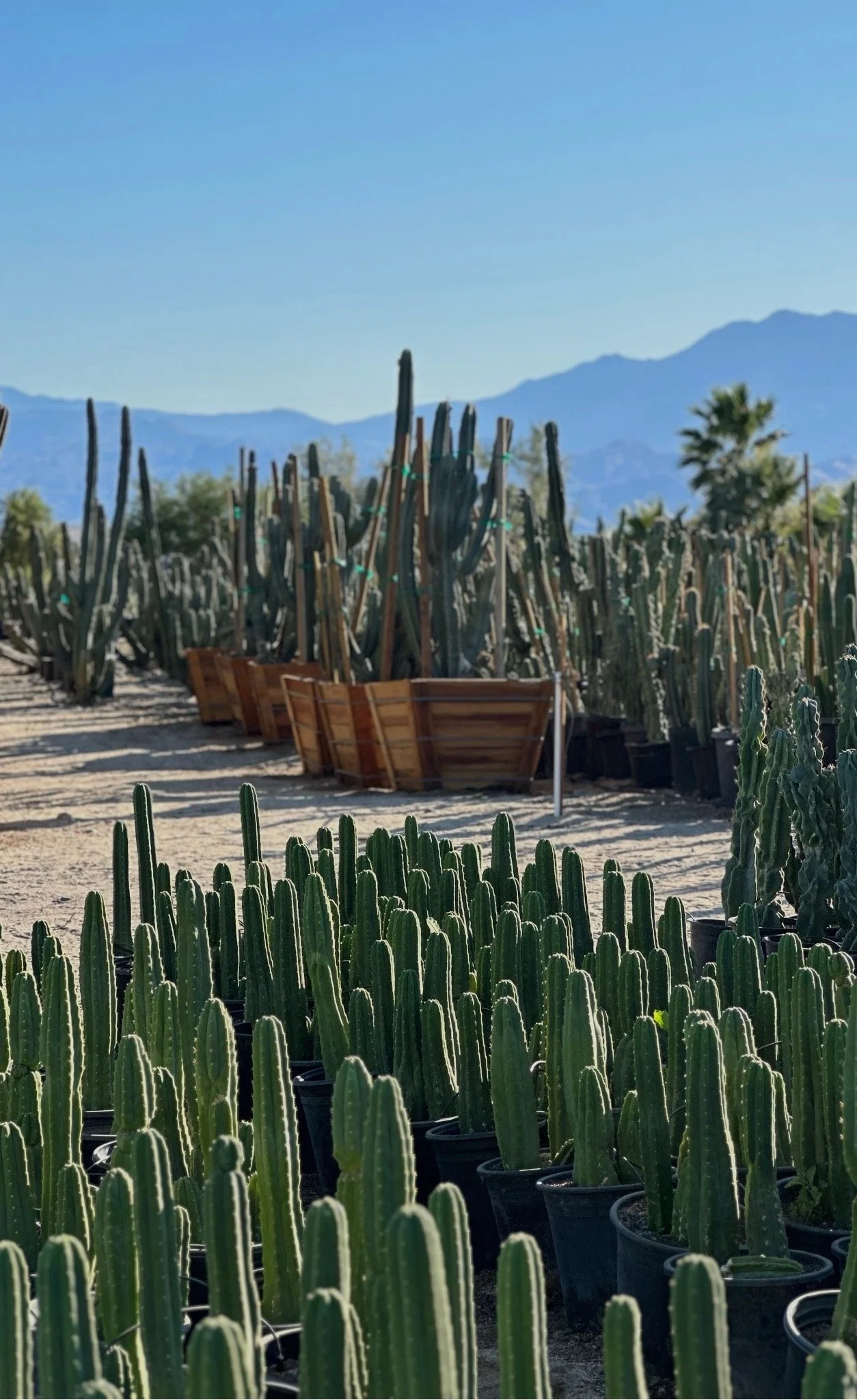
The client loves spending time at GDNC Nursery, so we made the plant selection process collaborative. We walked the nursery together, hand-selecting specimens and drawing inspiration directly from the environment she loves. The goal was to bring a curated piece of that nursery experience into her own front yard.
Palm Springs, California
Location: Movie Colony, Palm Springs, CA
Completed: 2026
Landscape Designer: Logan Guinard
Landscape Contractor & Nursery: GDNC Nursery
Before the construction
Before the transformation, the front yard lacked structure and identity. The space felt flat and disconnected from the architecture of the home, with no clear focal point and little depth to engage the eye. Despite the presence of a mature palm and a few established desert plants, the overall composition felt scattered rather than intentional.
The southern exposure brought intense sunlight throughout most of the day, amplifying the emptiness of the space rather than enhancing it. Without layered planting or sculpted topography, the yard appeared visually harsh and unfinished. The ground plane was largely uniform, offering no variation in elevation to create dimension or movement.
Circulation was undefined, the entry gates lacked framing, and the perimeter wall felt exposed instead of integrated into the landscape. The existing elements had potential, but they needed direction and cohesion.
Our task before construction was not simply to add plants, but to reorganize the entire spatial experience to create hierarchy, balance, and rhythm within a strictly desert palette. The project began with studying proportions, sun patterns, sightlines, and the relationship between architecture and landscape.
Artistic Renderings of the project
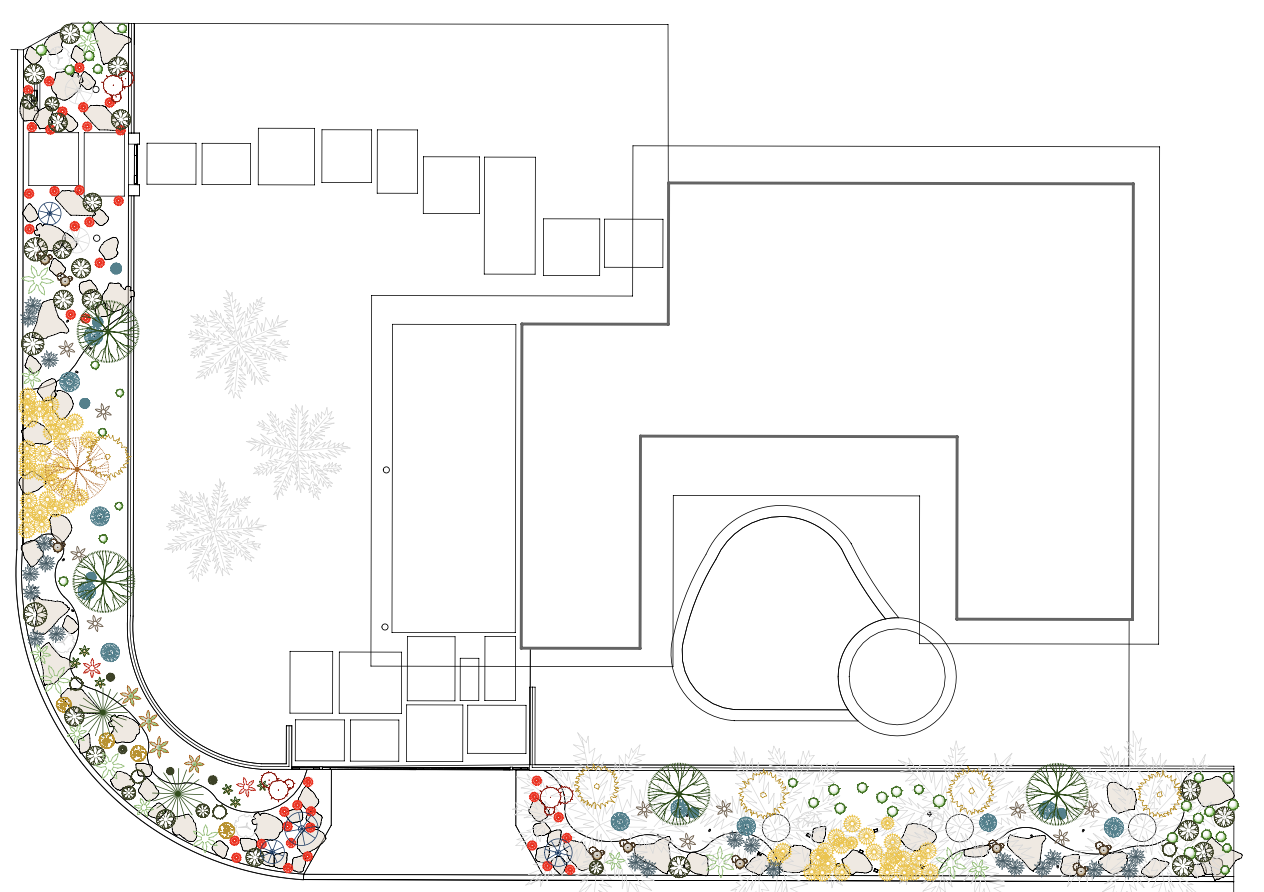
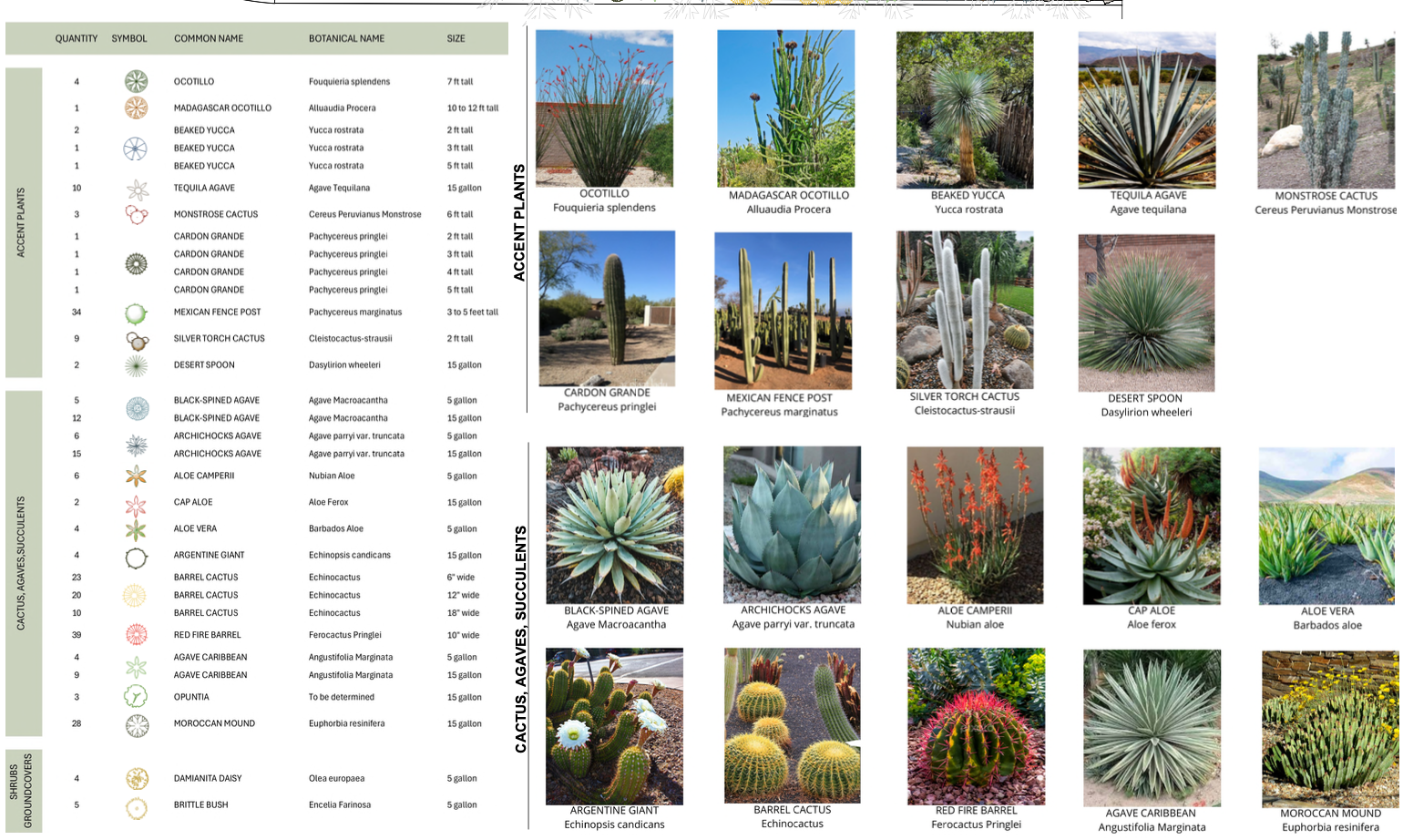
Once the vision became clear, the transformation began on paper.
The renderings told a story of strength and balance. A new vertical element was introduced on the west side to counterbalance the mature palm without obstructing the open views. Subtle mounded areas were sculpted into the terrain, breaking the flatness of the original yard and creating movement across the ground plane.
Boulders were positioned as architectural elements rather than decoration. They grounded the composition and reinforced the idea of protection. The space began to feel layered, intentional, and dimensional.
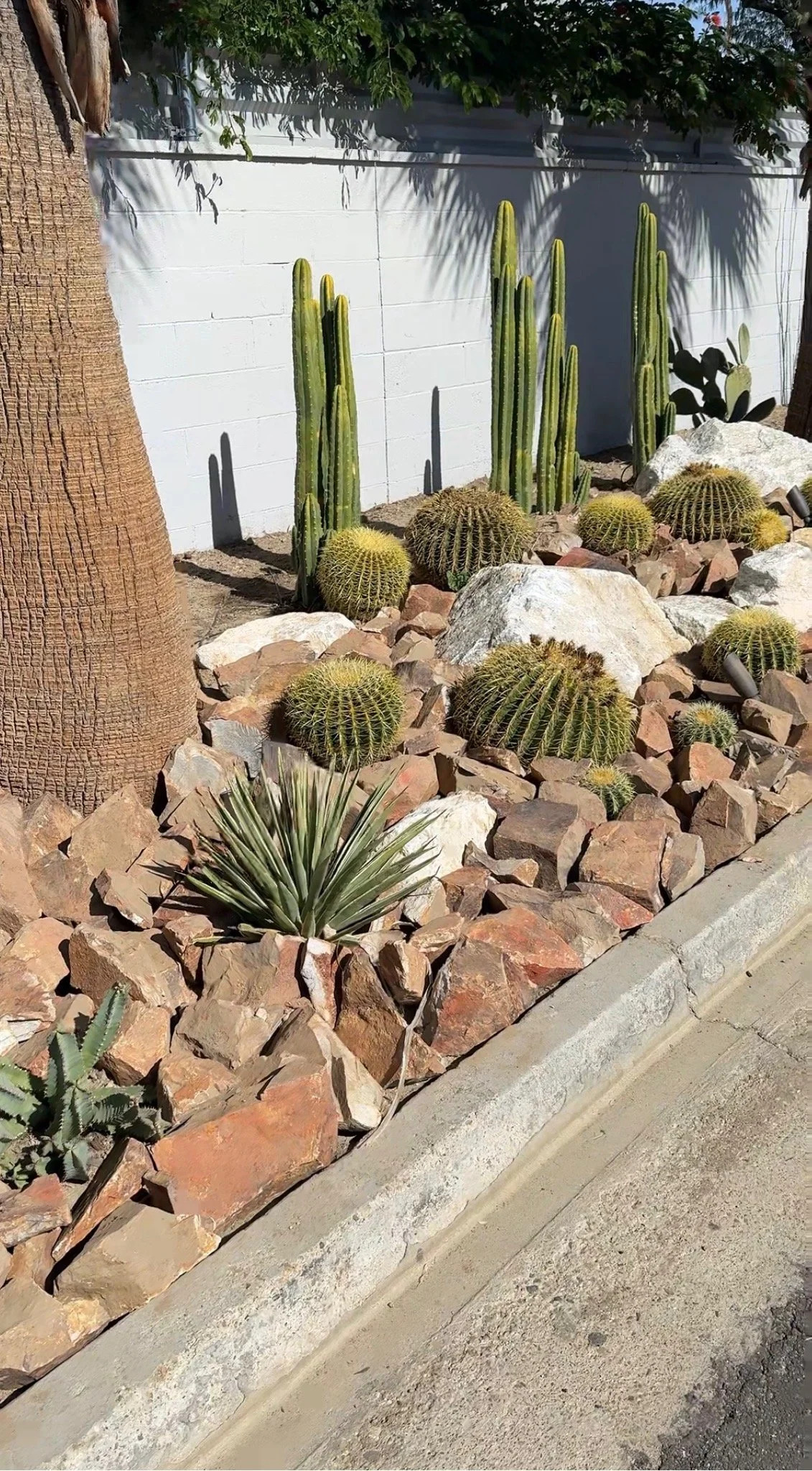
In the renderings, Yucca rostrata framed both gate entrances like guardians. Along the back wall, ocotillo and agave formed a living barrier — strong yet elegant. We imagined how the late afternoon light would cast elongated shadows across the wall, transforming the garden into a dramatic desert silhouette at night.
Specimen cacti were placed strategically at key visual corners, visible from multiple angles, almost like pieces in an outdoor gallery. Smaller varieties were woven between them to create rhythm and continuity without clutter.
Every plant had a role. Every rock had a direction. The artistic phase allowed us to refine proportion, tension, and balance before the first stone was moved.
Progress of the construction
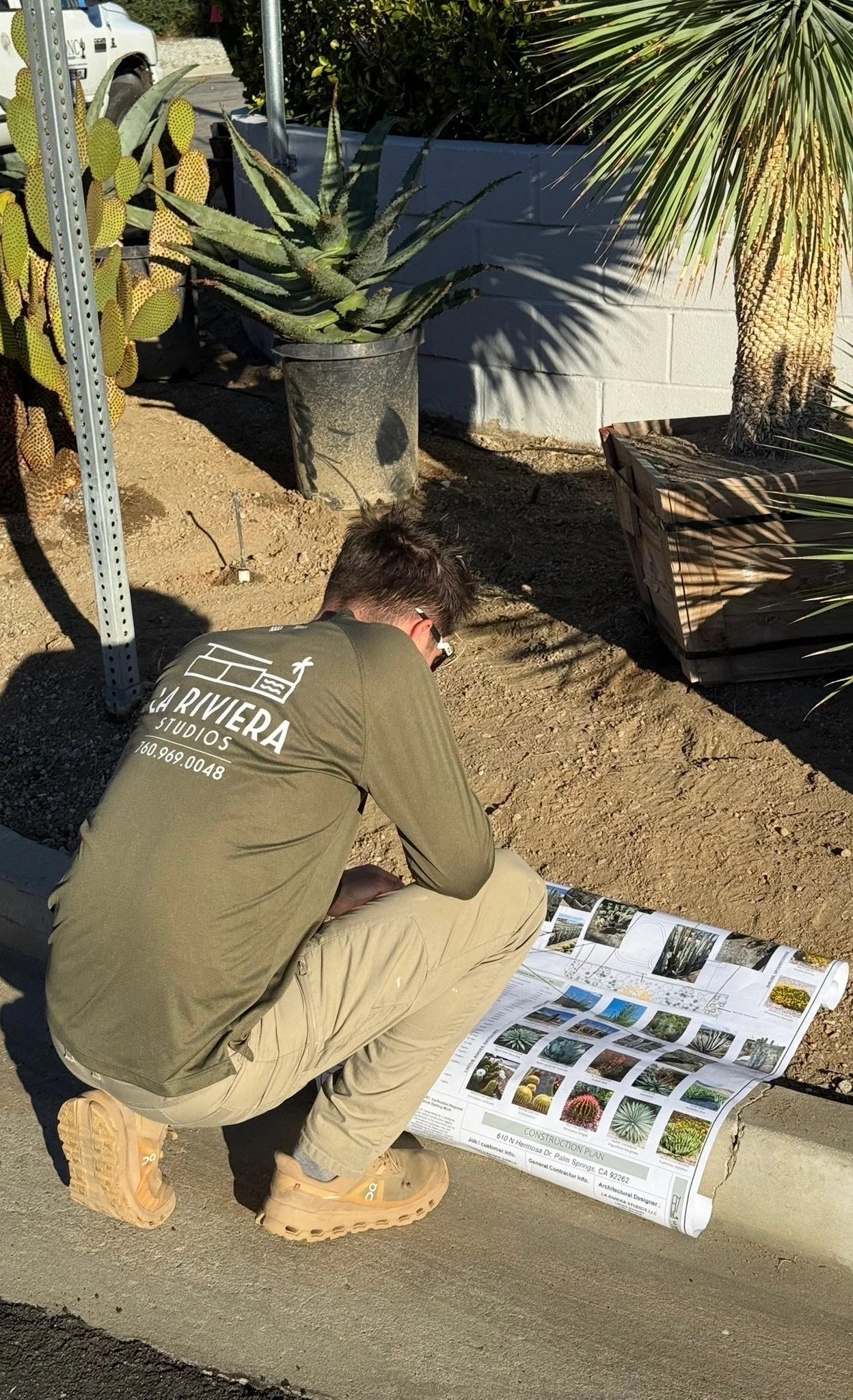
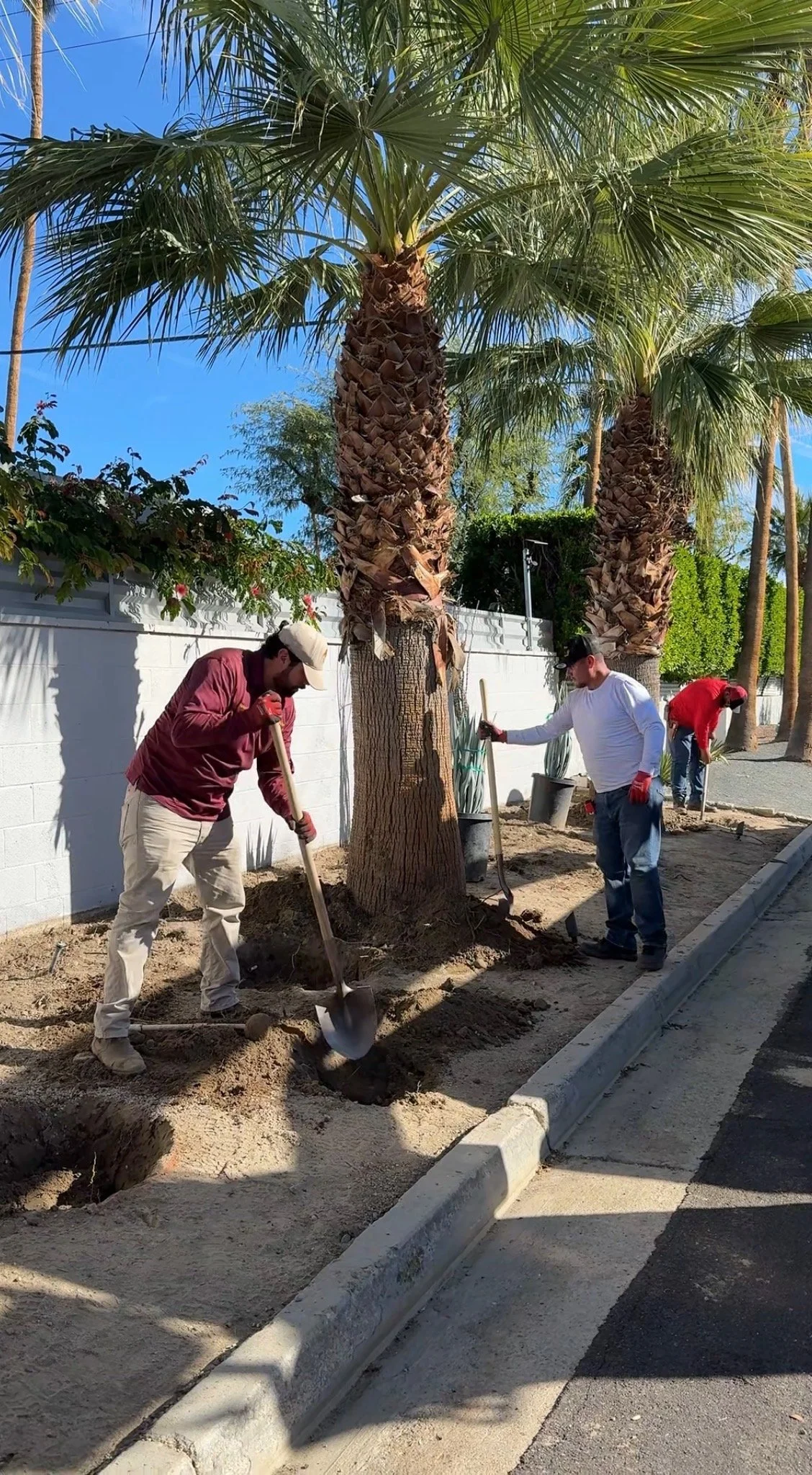
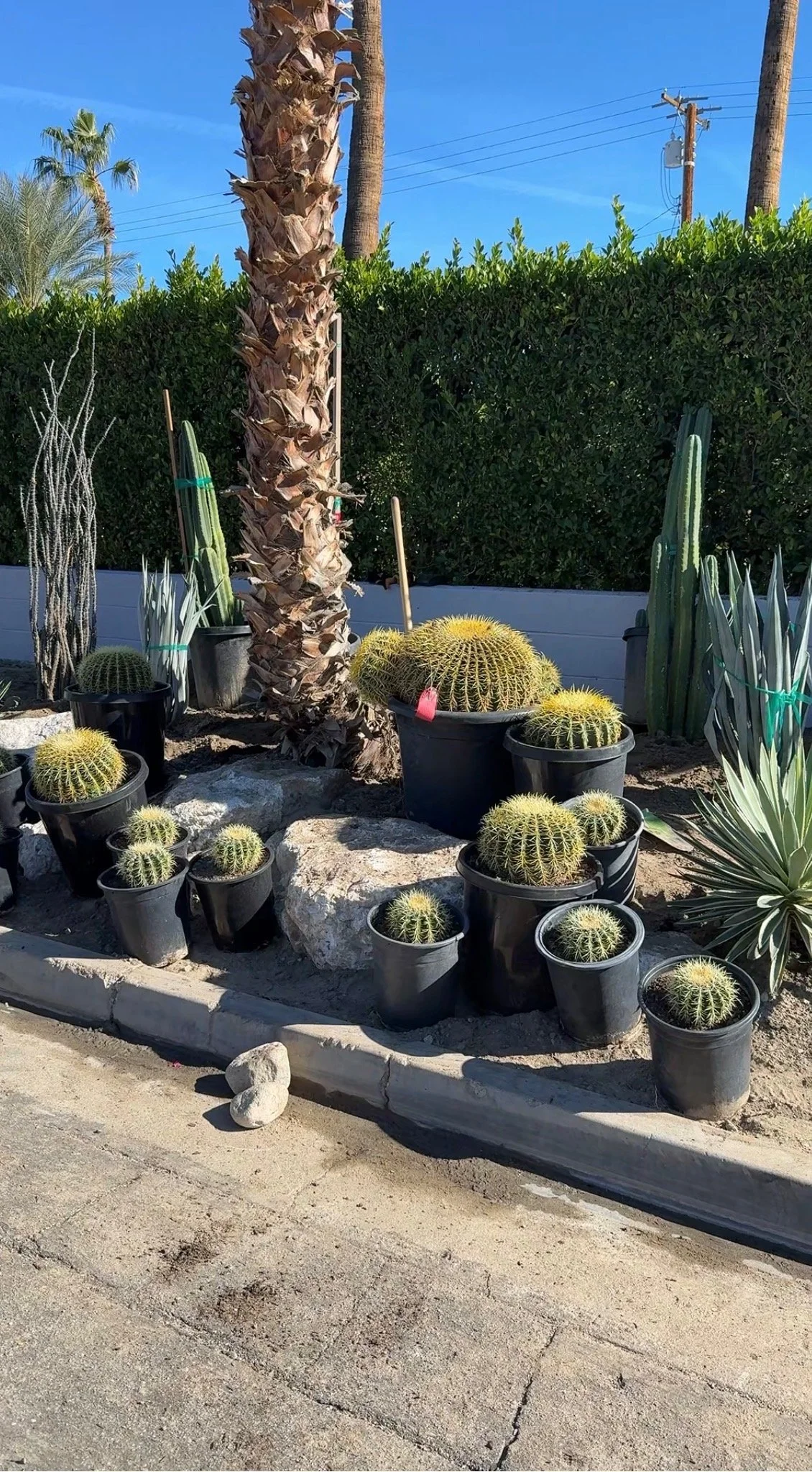
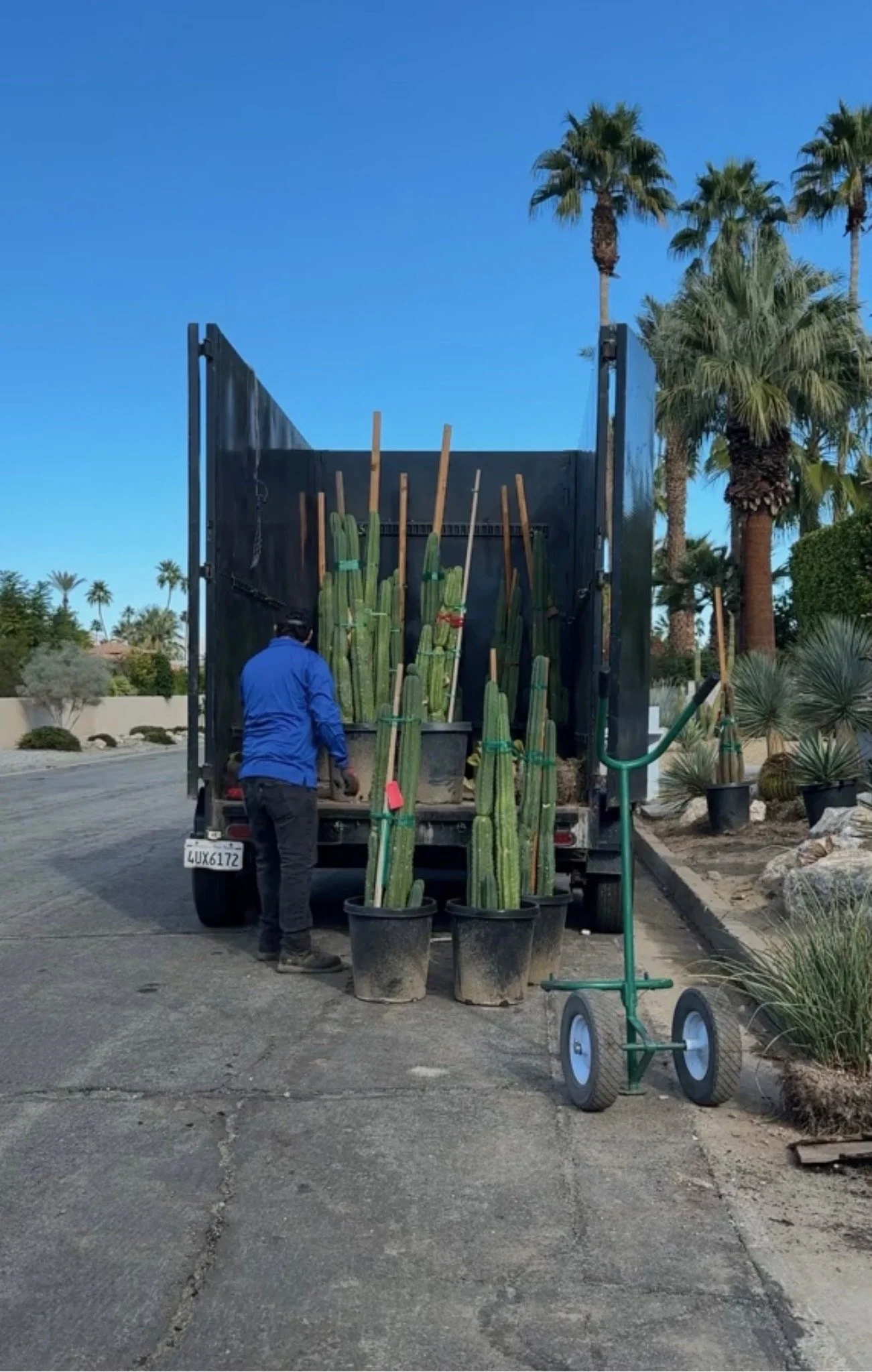
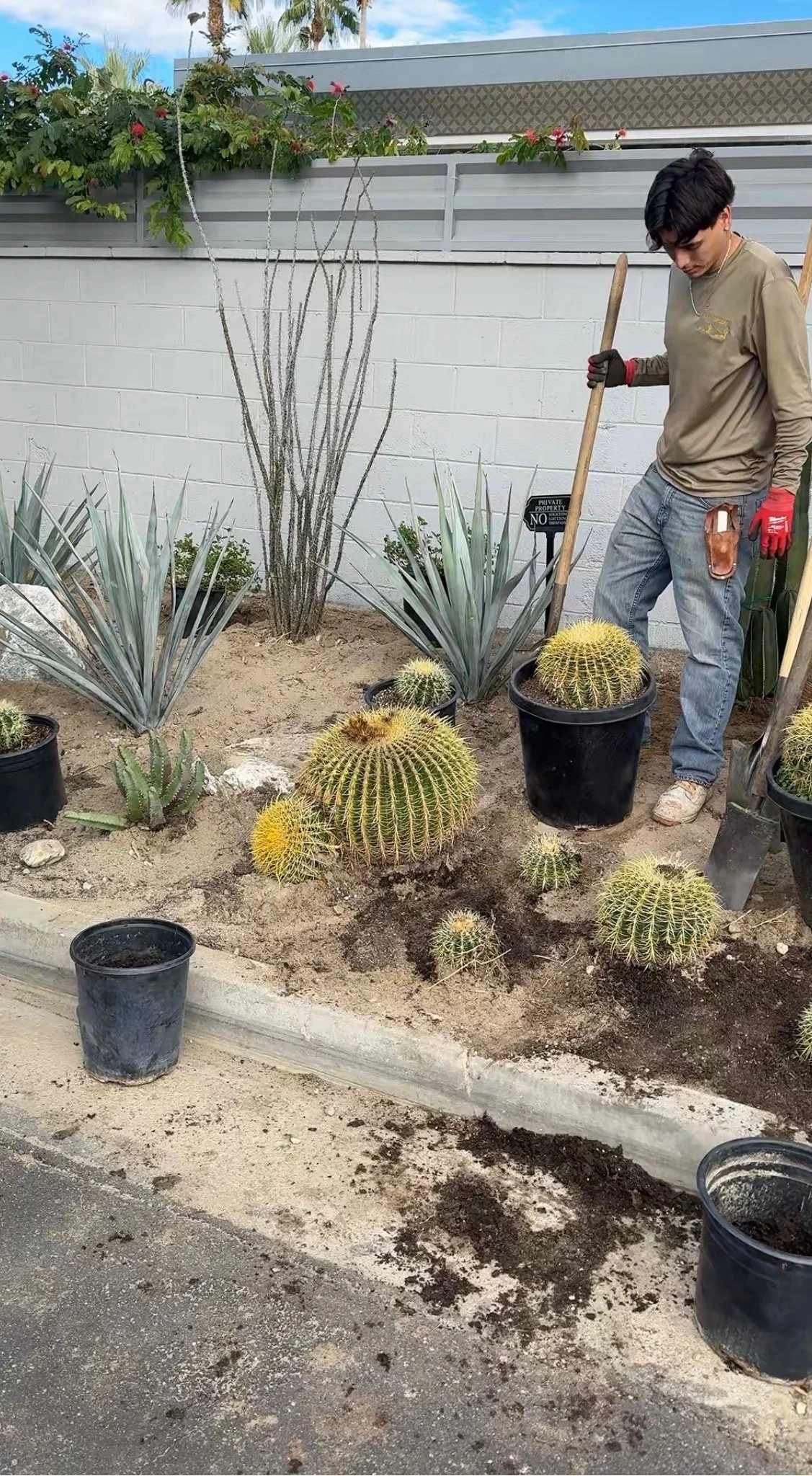
When construction began, the transformation became physical.
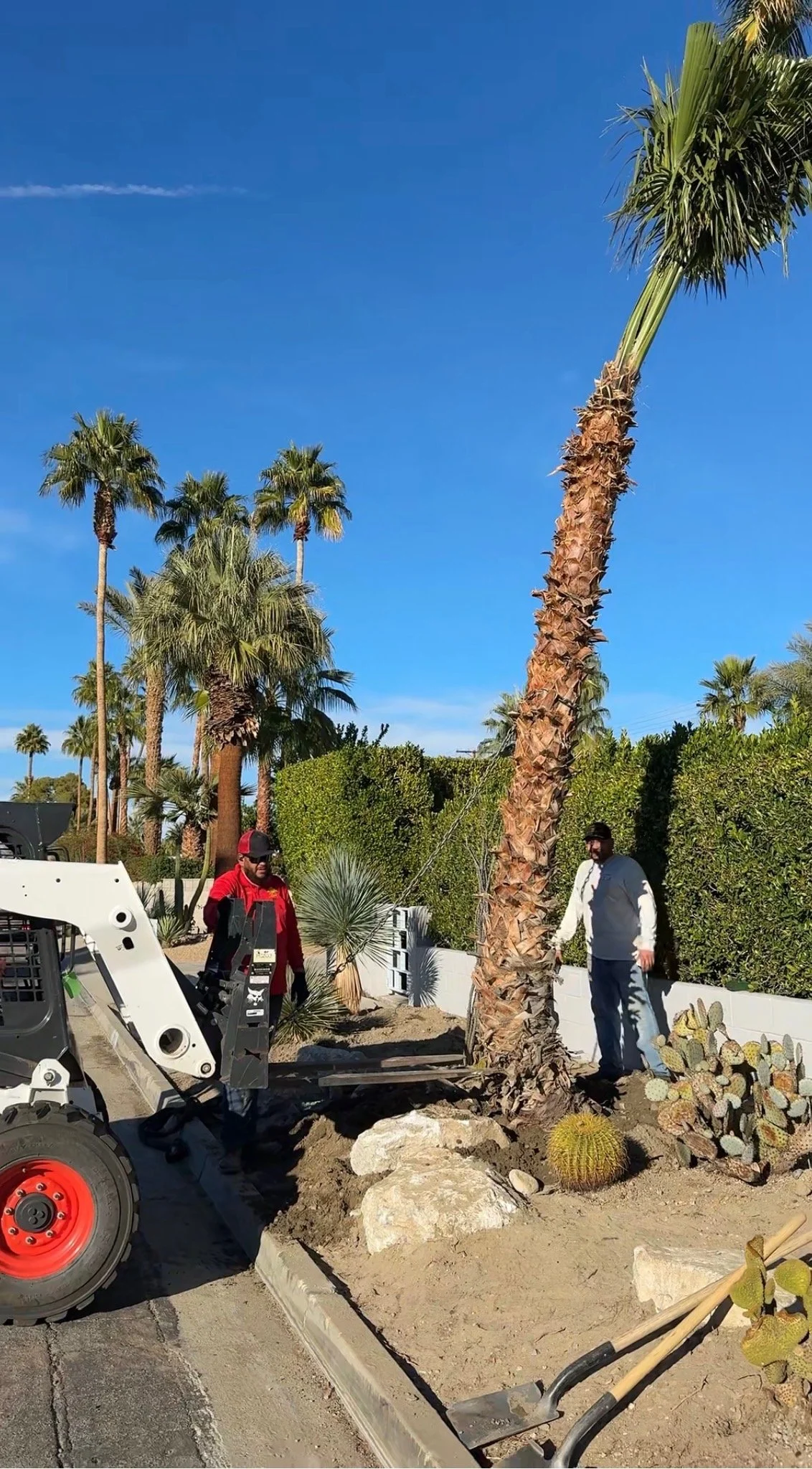
Because of the intense sun exposure and proximity to the street, the installation required precision and strategy. The project was divided into phases to ensure both safety and plant protection.
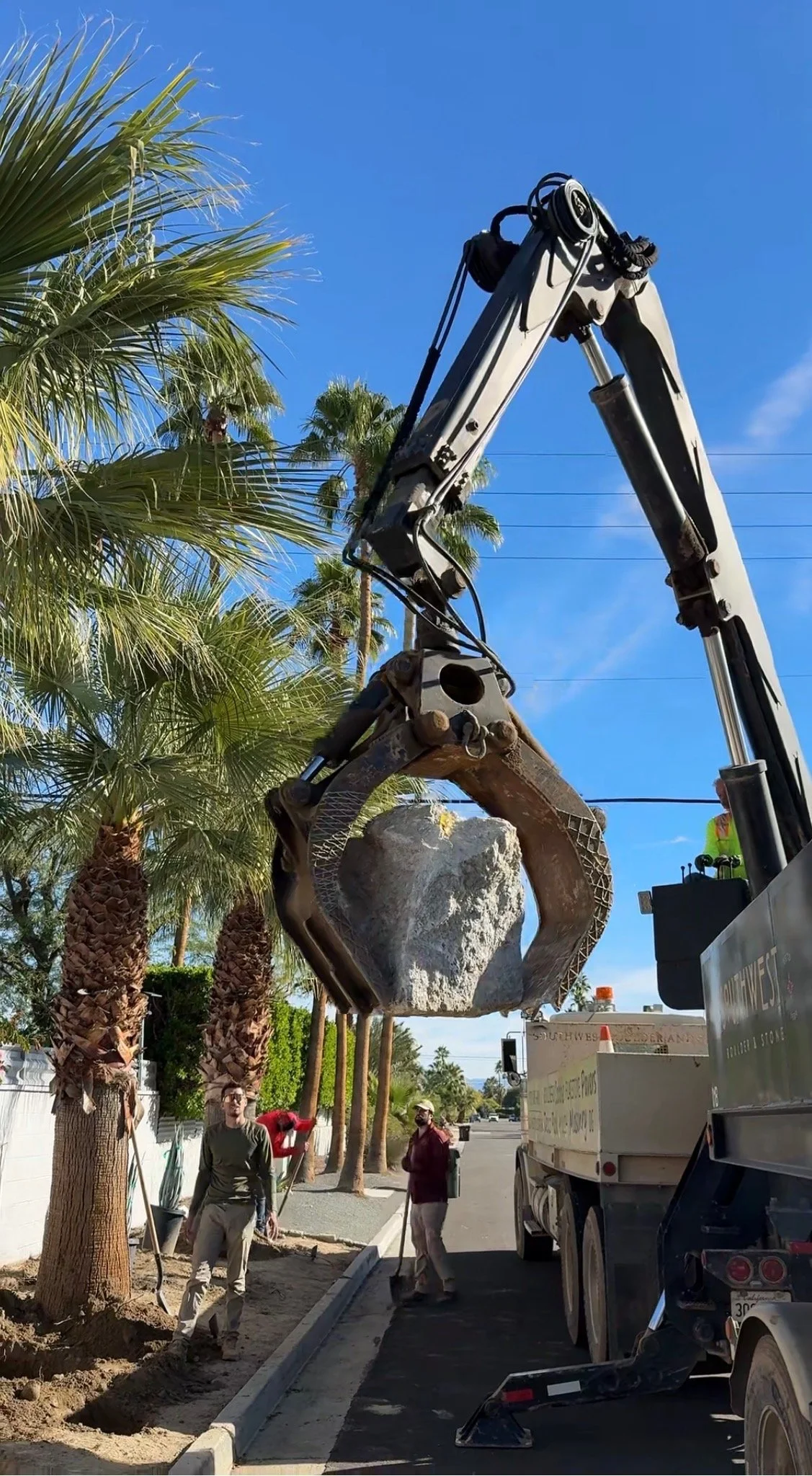
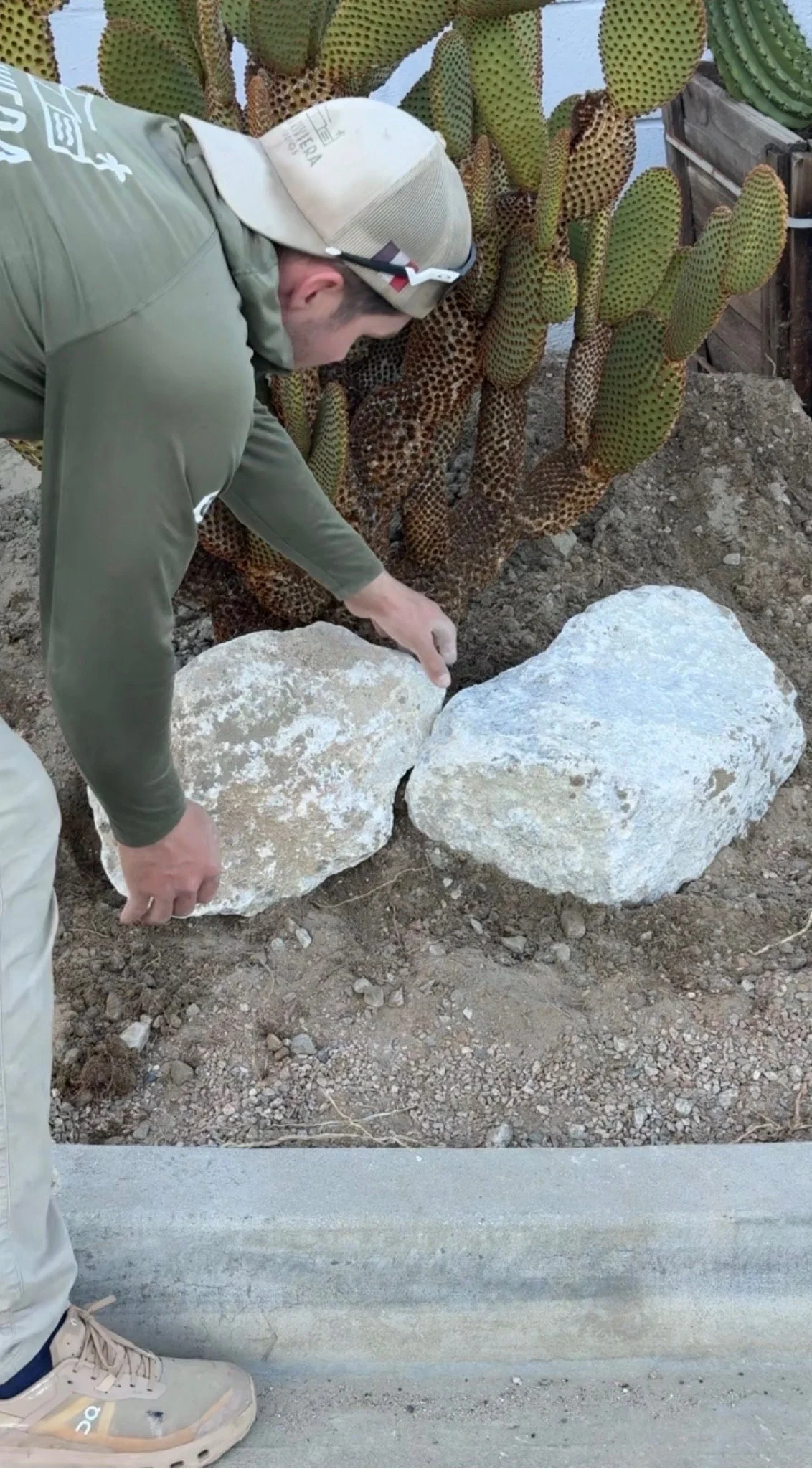
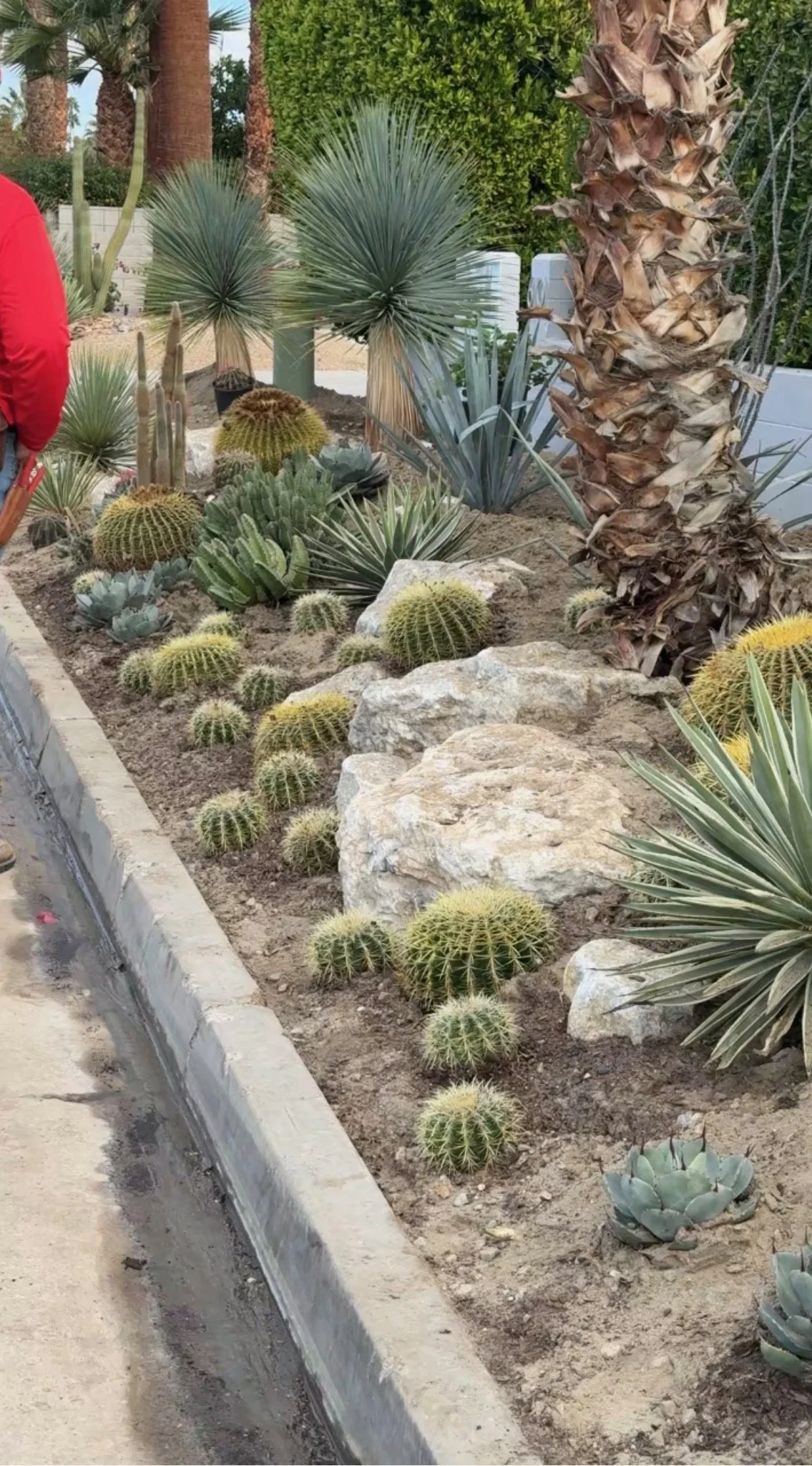
First came the earthwork — shaping the mounds and placing the major boulders. These were set carefully, rotated, and anchored with intention. They defined the skeleton of the landscape.
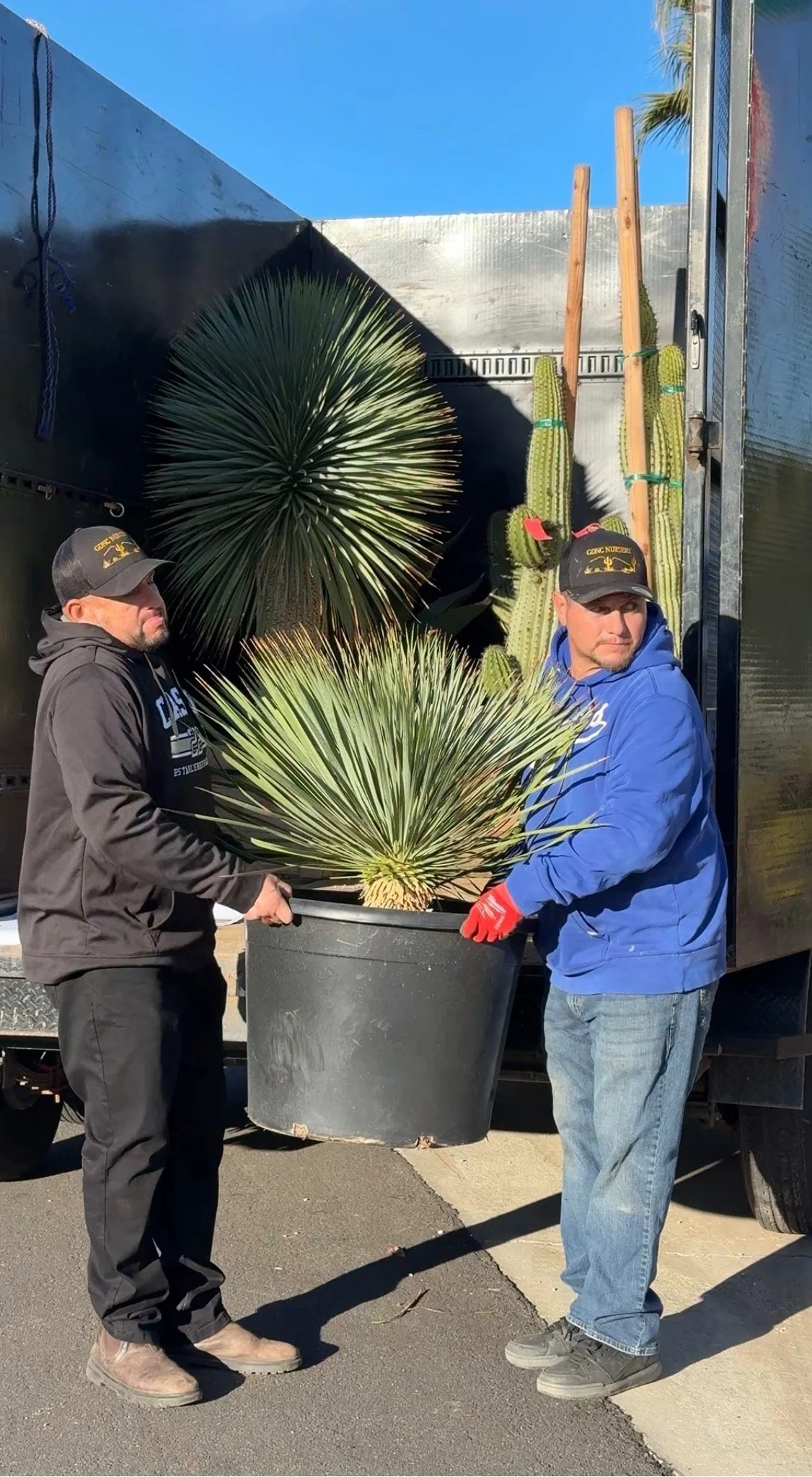
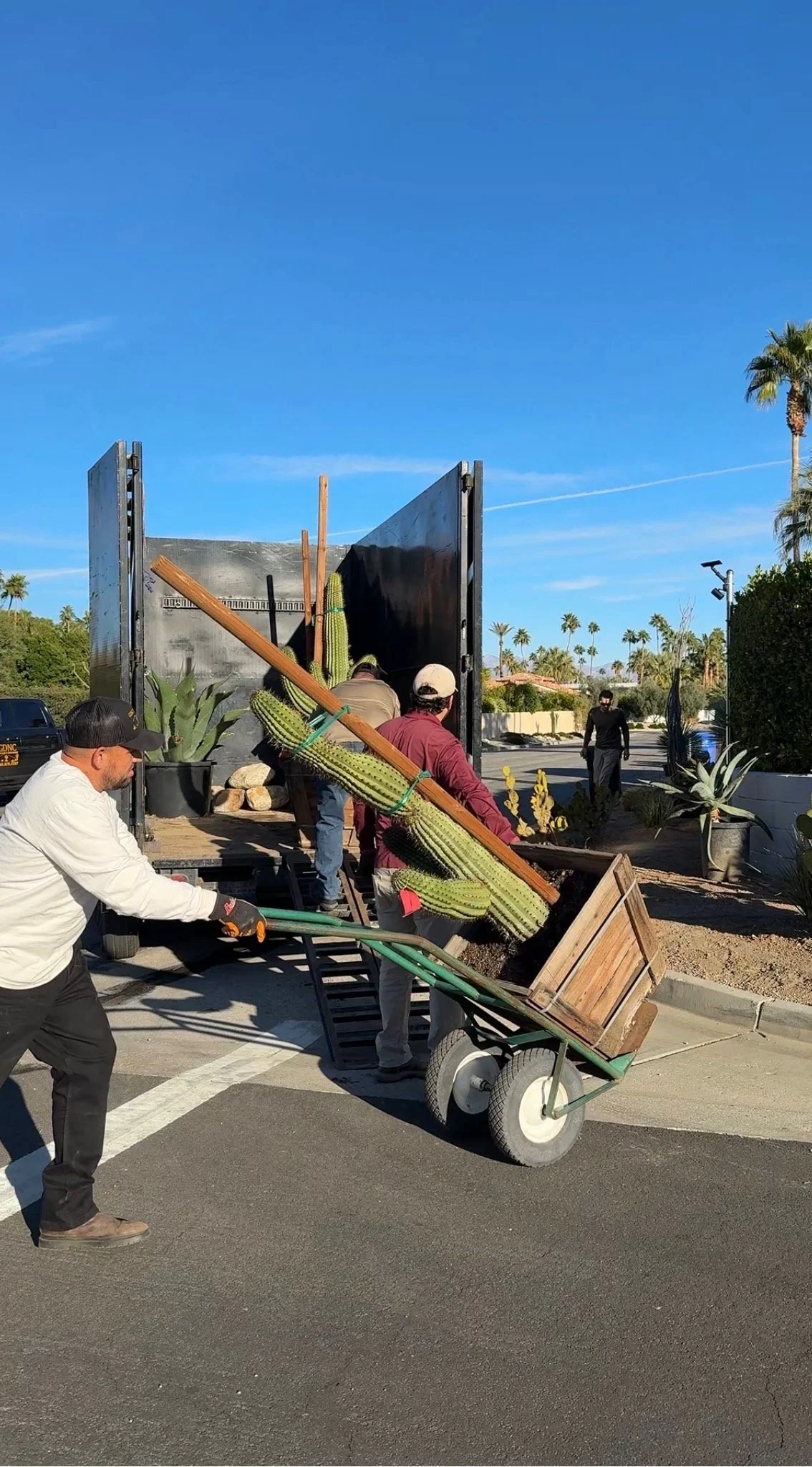
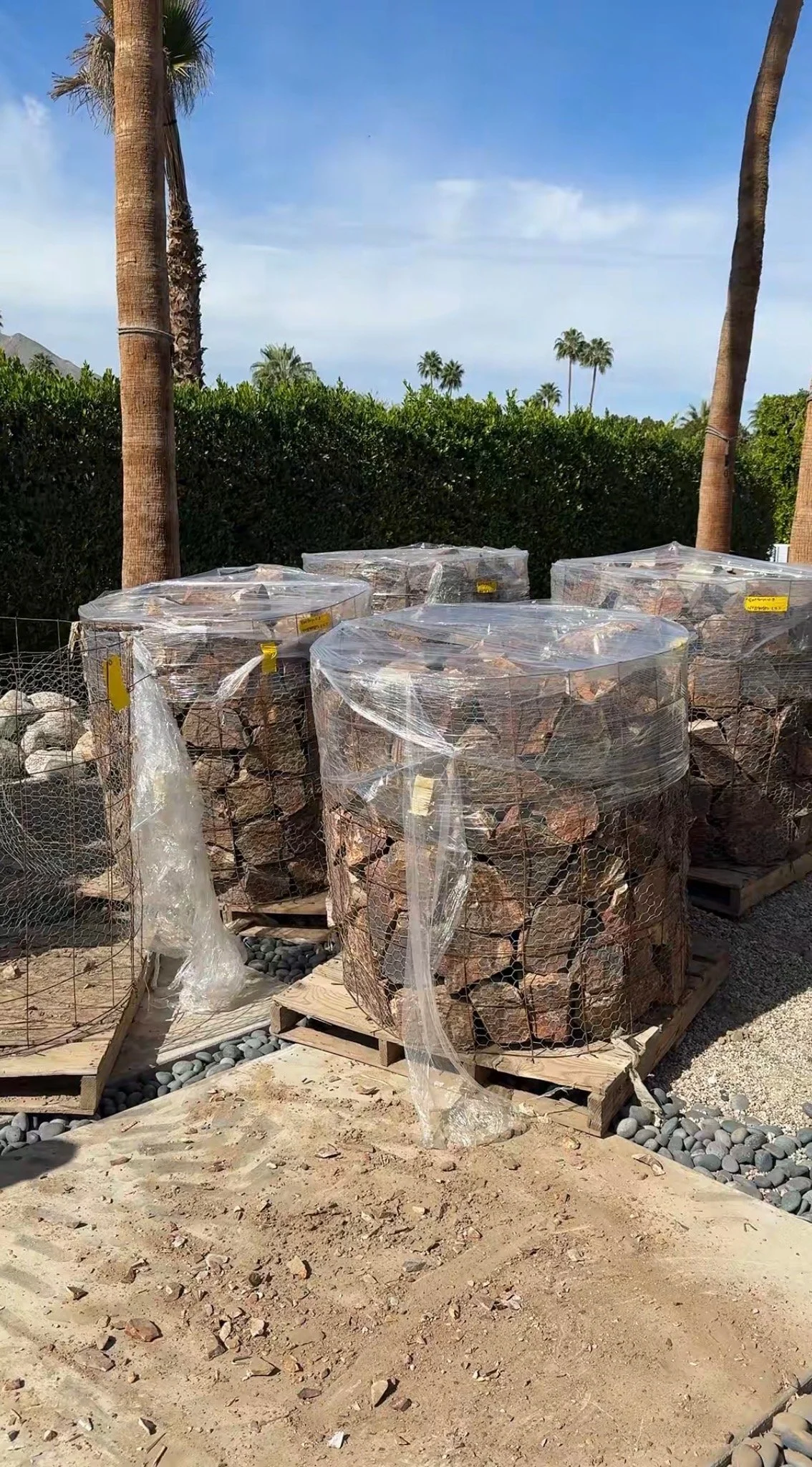
Next came the structural plants, the tallest and most commanding specimens. Once they were in place, the secondary and smaller cactus varieties followed, each positioned to enhance contrast in height, color, and texture. Irrigation and lighting were integrated thoughtfully, allowing the garden to perform both day and night beautifully. Finally, aggregate and finishing details unified the composition.
Throughout the process, each element was placed deliberately. Nothing was random. Orientation mattered. Perspective mattered. Security mattered.
What slowly emerged from the ground was more than a succulent garden.
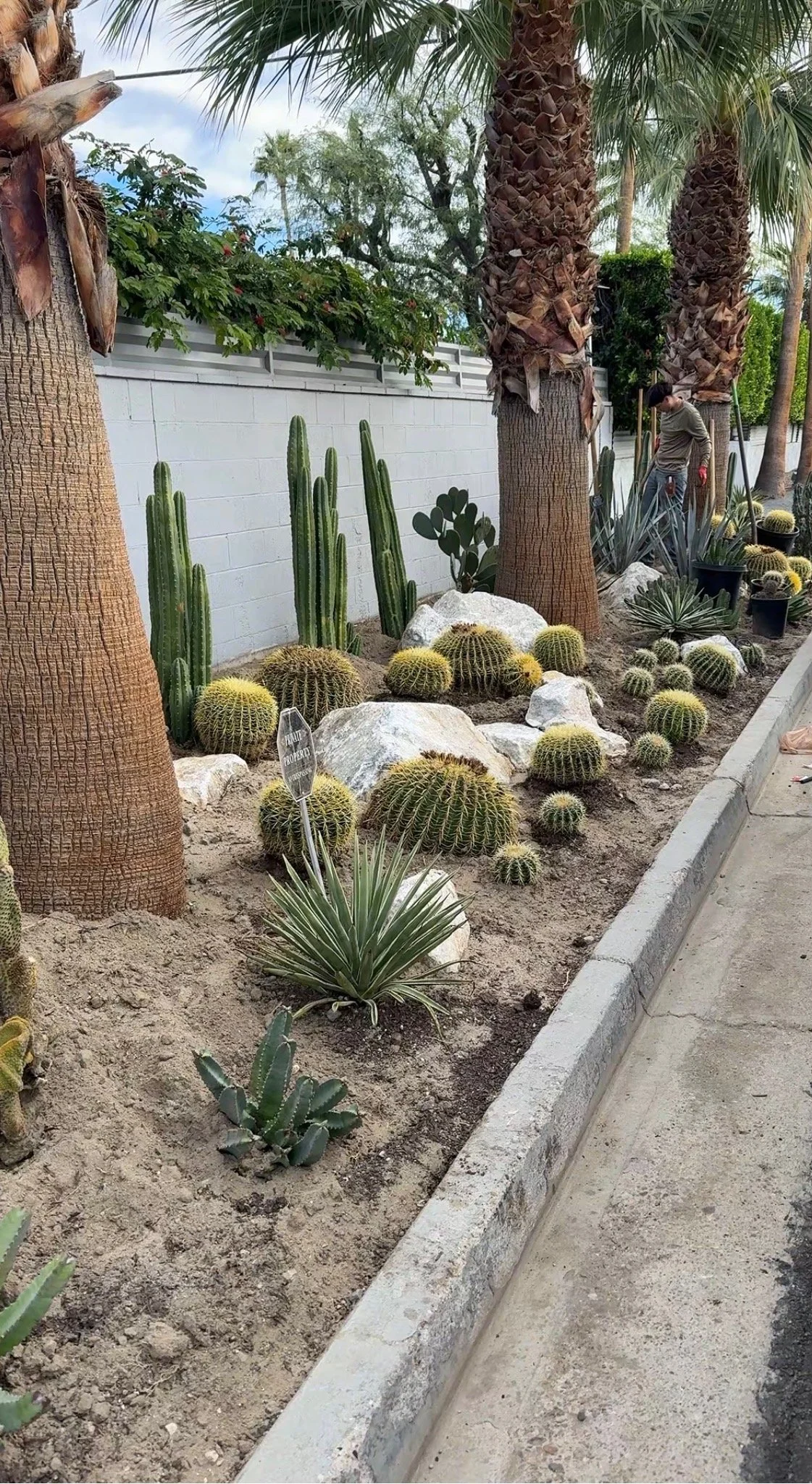
Cactus Shield became a sculptural desert composition that protects without feeling defensive. A landscape that deters without appearing aggressive. A front yard transformed from vulnerable to powerful, built from stone, shadow, and resilience.
The final result
Cactus Shield is more than a succulent garden.

It is a protective landscape.
A sculptural desert composition.
A personal sanctuary that blends security, beauty, and climate-resilient design.

This is how Cactus Shield came out of the ground.